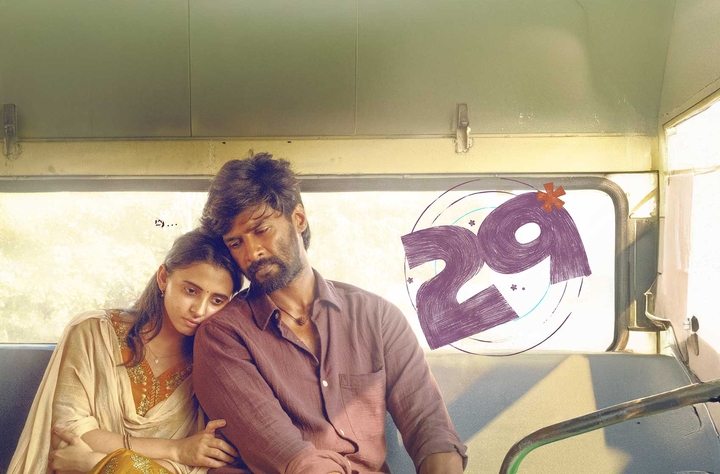
Bengaluru: Now that Rathna Kumar’s film 29 has officially arrived on its streaming home on Netflix, the initial theatrical dust has settled. Most audiences have finally had a chance to stream it over a quiet weekend, stripping away the artificial noise of opening-week box office figures and marketing hype. This shift into digital accessibility gives us the perfect space to step back and look closely at the actual text of the story, parsing through its technical choices, performance layers, and structural beats at length. Let us be entirely grounded from the outset: 29 is not a flawless, once-in-a-generation cinematic masterpiece that will rewrite the global history of celluloid. If we hold it up against the absolute peaks of existential filmmaking, there are undoubtedly tighter screenplays and more visually staggering works out there. Yet, in the context of our recent cinematic landscape, which has been exhaustively dominated by loud, hyper-violent spectacles and superficial blockbusters, this film emerges as a genuinely good, earnest, and deeply resonant piece of storytelling that commands our attention.
To understand why this film clicks despite its mechanical imperfections, we can look back to a classic critical tool known as Matthew Arnold’s touchstone method. Arnold believed that to truly evaluate the worth of contemporary art, a critic should hold lines and fragments of undisputed sublimity from classic masterpieces in their mind to serve as a literal touchstone for emotional honesty. If we place 29 against the global touchstones of existential and drifting youth—such as the quiet, aching mid-twenties vacuum of Richard Linklater’s Before Sunrise, or the rain-drenched, melancholic isolation of Wong Kar-wai’s Days of Being Wild—we can instantly gauge its true weight. It does not possess the flawless, poetic rhythm of those classics, but it operates with an identical level of emotional vulnerability. When compared to the gold standards of Tamil cinema’s realistic relationship dramas, like the unhurried, texturally rich domesticity of Rajiv Menon’s Kandukondain Kandukondain or the raw, unvarnished character friction in Mani Ratnam’s Mouna Ragam, Rathna Kumar’s work holds up remarkably well. Its value isn’t found in a glossy finish or hyper-stylized pacing. Instead, its worth lies in how it captures the invisible, claustrophobic identity crisis that tends to paralyze a human being just as they stand on the precipice of their thirtieth year.
The narrative unfolds with a refreshing, unhurried focus on Sathya, a twenty-nine-year-old graduate drifting across the concrete sprawl of Chennai. Rather than handing him a glorious, highly cinematic purpose, the screenplay keeps him moving through beautifully mundane, unglamorous occupations. He floats from a mind-numbing accounts desk to working as a catering server, eventually finding himself hiding inside the literal, suffocating velvet structure of a shopping mall mascot costume. It is this specific progression of transient jobs that serves as the film’s narrative engine. The script constantly forces us to ask what happens to a person’s dignity when the line between their internal self and their survival-driven societal disguise begins to blur entirely.
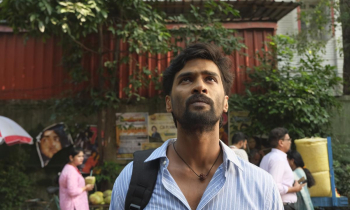
One brief, quiet exchange embedded in the dialogue serves as our primary touchstone for the entire film. Sathya is asked what he wanted to become when he grew up, and his simple, devastating reply is that he did not know, he just wanted to grow up. It cuts right through the traditional fluff of cinematic heroics and voices the collective, unspoken anxiety of a generation that grew up too fast only to realize they are completely directionless.
The true anchor of this exploration is Vidhu, who delivers an incredibly grounded, nuanced performance as Sathya. After a very long time, a hero who is visibly vulnerable does an exceptionally good job of portraying a man who is actively imploding from within, managing to steer the character completely away from the trap of generic, loud cinematic depression. He brings a raw, unpolished, and intensely physical vulnerability to the role. Watch him in the scenes where he interacts with his friends in their shared bachelors’ mansion—there is a subtle, slumped exhaustion in his posture that tells you everything you need to know about his state of mind before he even speaks a word. He inhabits the character so fully that even when Sathya is being deeply indecisive, frustrating, or pulling away from the people who love him, you cannot look away. Vidhu holds the emotional weight of the film on his shoulders, grounding the director’s loftier philosophical ideas into something deeply felt and entirely human.
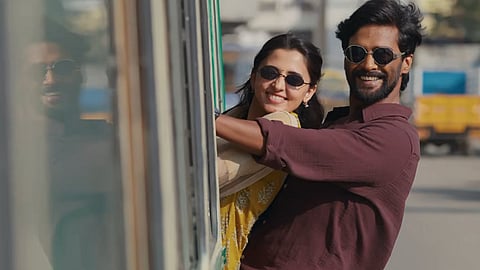
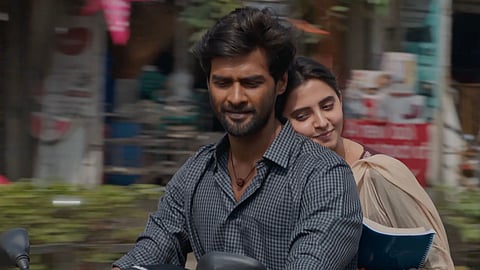
This unpolished realism finds its perfect contrast when Sathya’s chaotic path collides with Viji, played with remarkable clarity and steel by Preethi Asrani. Viji is his absolute psychological counterweight—a highly ambitious, fiercely focused civil services aspirant whose life is mapped out with a clean, uncompromising discipline. The brilliant, naturalistic chemistry between Vidhu and Preethi Asrani is what keeps the central romance subplot beating with a genuine, lifelike pulse.
Rathna Kumar writes a standout, dialogue-heavy scene set in a quiet room that perfectly highlights this friction. From the second they cross the threshold, the unacknowledged tension in the room is palpable. What starts as a minor misunderstanding gradually unravels into a raw, layered argument that lays bare the massive gulf between their worldviews. Viji, in a striking moment of clarity, confesses that her hyper-focused academic life has left her entirely unequipped to handle the complicated emotional needs of a partner. It is a scene written with immense structural maturity, shifting the traditional blame away from standard romantic villainy and showing us two well-meaning people simply struggling to outlive the comforting fantasy of love.
Where the film occasionally loses its footing and stops itself from becoming truly great is in its mid-film pacing and a clunky narrative detour. The screenplay takes a prolonged, head-scratching side-step into a subplot featuring actor Mahendran to forcefully resolve Sathya’s identity crisis. This section shifts Sathya’s focus toward an intense grassroots ecological movement centered on reclaiming a choked, dying lake. While the metaphor is clear—Sathya is subconsciously trying to desilt his own blocked identity by cleaning up the community’s water—the execution feels a bit heavy-handed compared to the quiet brilliance of the earlier domestic romance. The film starts to talk a bit too much, wrapping up its loose ends with a predictable, slightly engineered neatness that robs the final act of some of its organic grit.
On a technical front, the cinematography mirrors this shift in perspective. The camera relies heavily on natural light, casting Chennai not as a glossy tech hub, but in soft, slightly muted tones that reflect late-2000s and early-2010s nostalgia. The framing deliberately emphasizes space—often isolating Sathya against vast, empty backgrounds or crowding him within tight, claustrophobic frames when his anxiety peaks.
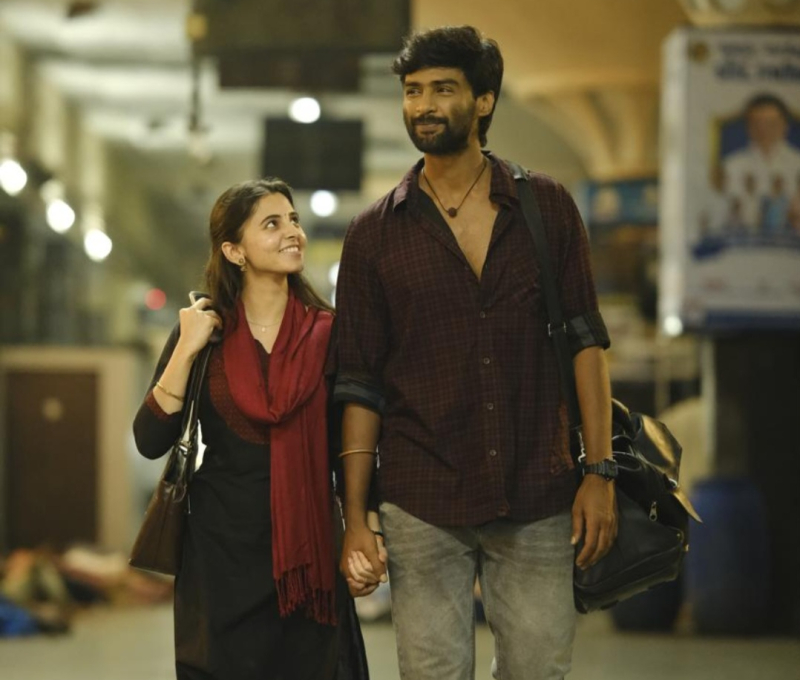
This visual architecture is backed completely by Sean Roldan’s incredibly fresh, acoustic musical score. The songs and background themes do not merely decorate the narrative; they function as its absolute heartbeat. Roldan’s instrumentation carries an exquisite lack of hurry, creating acoustic spaces that encourage the viewer to pause, breathe, and revel alongside the characters’ silent longings and unspoken heartbreaks. It successfully captures the old-school charm of a classic romance while engaging deeply with real-world, contemporary anxieties.
It does not need to be a historic masterpiece to deserve your time. In our current streaming landscape, finding a film that chooses to look at the unvarnished reality of adulthood with this much warmth and empathy is a rare, solid win. It is exactly the kind of thoughtful, grounded watch that leaves a lasting impression long after the credits roll.