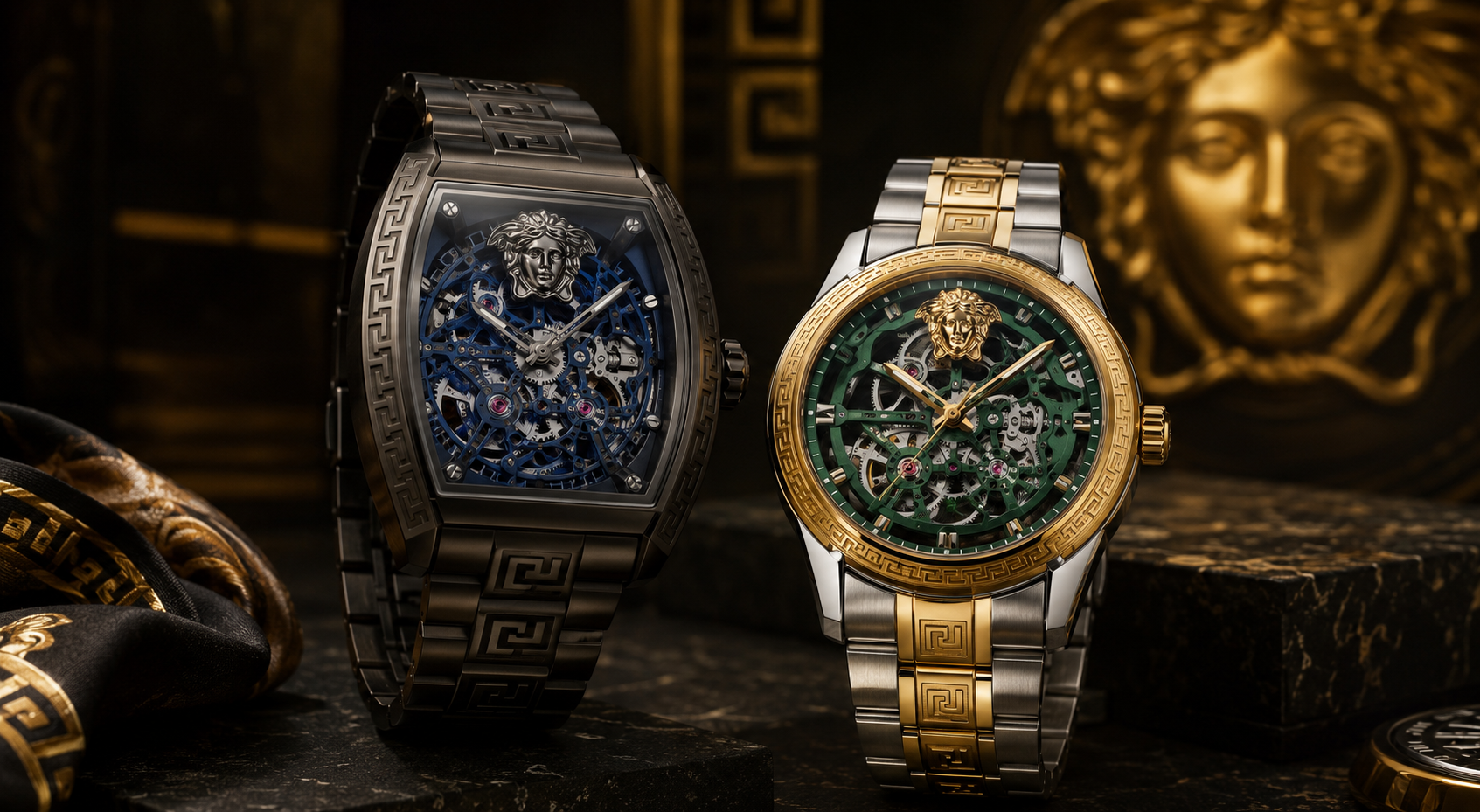
Bengaluru: Ask any hardcore Indian watch collector about fashion house wristwear, and you will usually get the exact same collective eyeroll. For decades, the unwritten rule of serious horology was simple and completely unyielding. If a brand is world-famous for dramatic runway clothes, leather handbags, or bold gold logos, their watches are almost universally written off as basic quartz batteries wrapped in a shiny, mass-produced case. You were paying an absolute premium for the name printed on the dial, not the machinery ticking underneath. It was purely a fashion accessory—nice to look at in a brightly lit boutique, but hardly something a serious watch enthusiast would spend time discussing over a dram of single malt.
READ ALSO: Redefining the Retail Canvas: How Mantri Beauty Affair Brought Namrata Soni’s Magic to Bengaluru
So, when news officially broke that Versace released a pair of wristwatches priced well above ₹4 Lakhs, most people in the Indian luxury scene expected more of the same maximalist glam. We expected flashy branding, a quartz heart, and a heavy dose of Italian drama.
But then you pull the watch closer, take a deep look into the sapphire crystal face, and that is where the ultimate plot twist hits you.
There is no battery hiding in here. There is no quiet, predictable, electronic quartz tick. Instead, you are staring directly into the beating, open, and intensely intricate heart of a Swiss-made automatic mechanical engine.
The Plot Twist: When High Fashion Gets Serious About Micro-Gears
With the release of the Dominus Skeleton and the Millenyium Automatic Skeleton, Versace is not just dropping another stylish accessory for the summer season—they are actively crashing the serious horology party.
For the uninitiated, a “skeleton” dial means the traditional face of the watch has been completely stripped away by master watchmakers. It leaves the inner gears, mainspring, winding rotor, and mechanical bridges totally exposed to the naked eye. You do not just check the time; you actively watch the time being constructed in real-time. Every microscopic rotation of the balance wheel and every click of the escapement is driven entirely by kinetic energy—the simple, natural movement of your own wrist.
It turns out, the legendary house that Medusa built does not just want to talk about silk prints and leather tailoring anymore. They want to talk about serious micro-engineering.
The Ultra-Exclusive Grail: Versace Dominus Skeleton
-
Price: ₹5,22,900
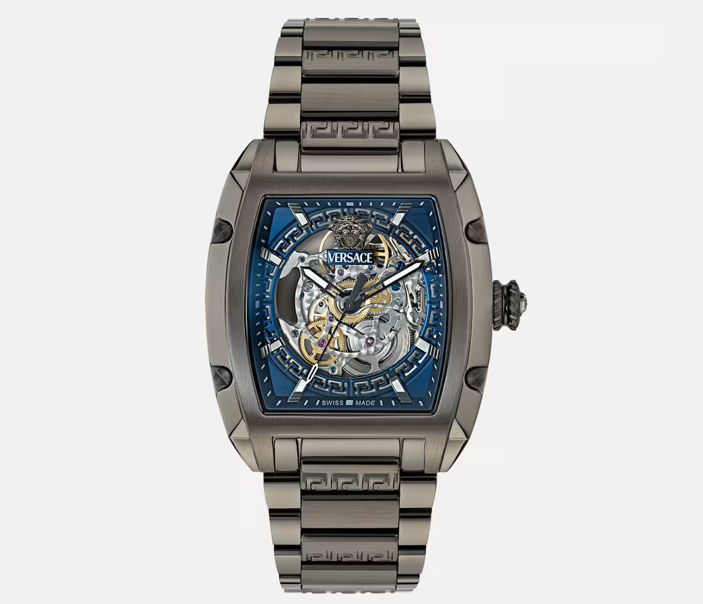
The biggest surprise about the Dominus Skeleton is not just its impressive price tag; it is the sheer, uncompromising scarcity built into its release. Versace chose to manufacture a mere 500 pieces of this watch for the entire planet. In a country like India, where the appetite for high-end luxury wristwear is exploding, securing one of these 500 units feels less like a simple boutique walk-in and more like landing a private VIP pass to a closed-door auction.
Visually, the watch completely breaks away from safe, traditional design norms. It skips the standard round silhouette in favor of an aggressive, modern tonneau (barrel-shaped) case finished in a dark, brooding IP gunmetal tone.
Floating directly over the mesmerizing maze of blue mechanical gears is a striking 3D Medusa head resting at the 12 o’clock position. The entire piece is framed by Versace’s signature Greca motif chiseled cleanly along the bracelet links. It is heavy, unapologetic, structurally complex, and undeniably rare on the wrist.
The Modern Classic: Versace Millenyium Automatic Skeleton
-
Price: ₹4,41,600
If the Dominus is the bold, statement-making powerhouse of the family, the Millenyium Automatic is the smooth, calculated diplomat.
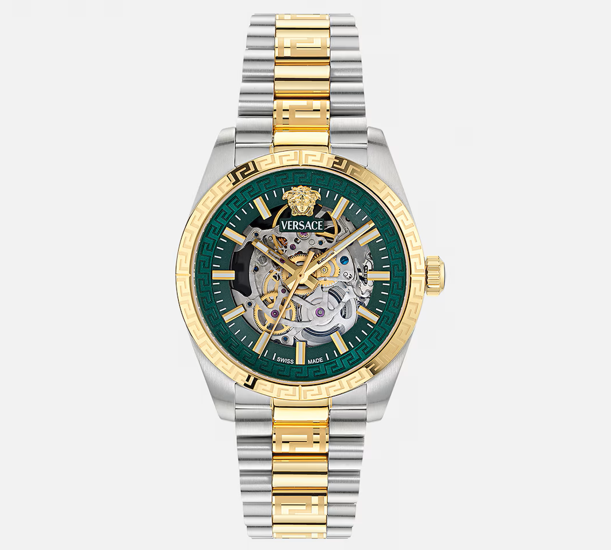
It keeps its proportions a bit closer to classic watchmaking traditions with a clean 40mm round, bicolor stainless-steel case. However, it hits you with an entirely unexpected visual punch: a striking, emerald-green skeleton dial.
The exposed Swiss automatic movement is protected under a scratch-resistant sapphire crystal glass, creating a brilliant harmony between disciplined Swiss watchmaking standards and unapologetic Italian runway flair. It is specifically designed for the contemporary collector who demands a legitimate mechanical movement on their wrist, but still wants people seated across the dinner table to recognize the icon on the dial instantly.
“The biggest flex in modern horology isn’t hiding how much you spent on a brand name. It’s stripping away the dial completely and showing everyone, the mechanical soul ticking inside.”
Why This Mechanical Twist Matters for Indian Collectors
We are currently living through a massive generational shift in how luxury is consumed across India. Today’s young collectors and wristwear enthusiasts are moving rapidly away from flat, predictable, flat-printed dials. The modern flex is no longer just about wearing a recognizable logo for status—it is about craftsmanship, engineering, and mechanical soul you can actually see working.
READ ALSO: The Architecture of Flavor: In Conversation with Chef Smriti Iyer of Ananth India
By marrying genuine, Swiss-made automatic movement standards with strictly limited production runs, Versace is making a loud, definitive statement. They are proving that a high-fashion powerhouse can step into the serious horological arena and deliver genuine mechanical heat.
Whether you are a seasoned collector looking for an unusual, conversation-starting curveball for your watch box, or an aspiring enthusiast making your very first leap into high-end mechanical timepieces, these open-heart creations prove one essential truth: in the evolving world of luxury, you should never judge a watch strictly by its brand label.