Developed with Thirtha in Bengaluru and available across The Rameshwaram Cafe’s outlets in India, the pairing brings together buttery bakery bread, almond-infused milk and a generous helping of nostalgia.
There is something deeply familiar about bread meeting warm milk. The crumb softens, the butter begins to melt and an otherwise ordinary mouthful takes on a comforting richness. The Rameshwaram Cafe builds on that simple pleasure with its bun maska and badam milk, a preparation that brings two well-loved foods together through a hot milk pour.
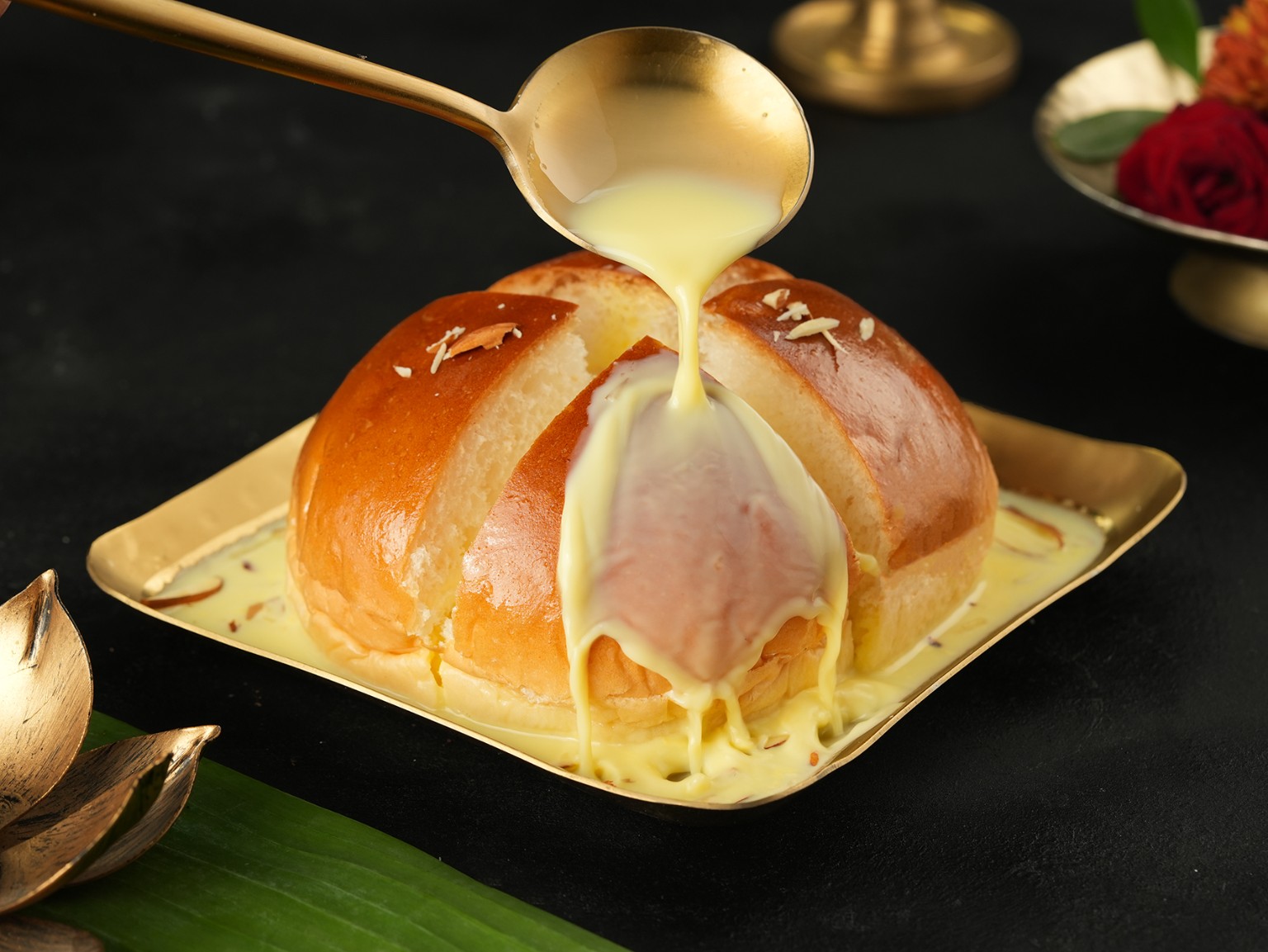
Developed in collaboration with Thirtha, the pure-vegetarian North Indian brand from The Rameshwaram Cafe team in Bengaluru, the dish begins with a freshly baked bun spread generously with maska. Piping-hot badam milk is poured over it, allowing the bread to absorb the almond-infused liquid. Available across the brand’s outlets in India, the pairing gives diners another way to experience a familiar bakery staple.
The idea originated at Thirtha, where, according to the brand, bakers prepare daily batches of soft, golden-crusted buns. The bread and its butter-rich filling form the foundation of the dish. The addition of slow-simmered badam milk, prepared with nuts and warm spices, changes both its texture and the way it is eaten.
That transformation is the heart of the preparation. Bun maska usually offers a contrast between soft bread and a generous layer of butter. Here, the milk becomes part of the bun itself. As it soaks into the crumb, the bread grows softer, bringing the combination closer to a warm bakery dessert while retaining the simplicity of its ingredients.
“Thirtha brought the foundation of exceptional in-house baking and premium maska, and together we introduced the warm Badam Milk pour,” the leadership team at The Rameshwaram Cafe said in its announcement. “It captures pure nostalgia while delivering a fresh culinary experience that food lovers of all generations can enjoy.”
The nostalgia comes from two distinct food traditions. Bun maska belongs to India’s enduring culture of bakery breakfasts and tea-time snacks, with a particularly strong association with the Irani cafés of Mumbai. Its popularity developed through cafés established by Iranian migrants during the nineteenth and early twentieth centuries, where buttered bread and tea became part of everyday urban life.
Read also: The Golden Triangle: How Samosa Singh is Reimagining India’s Favourite Snack
Its history also reveals how familiar dishes emerge through exchange. Historian Sifra Lentin’s account of Bombay’s Irani cafés describes how migrant café owners adapted to local tastes and learned from Goan Christian bakers in Dhobi Talao. The buns, bruns and soft pao associated with these establishments differed from traditional Iranian breads, just as their milky tea differed from the tea commonly consumed in Iran. What became a recognisable café tradition was shaped by the people and baking practices around it.
Within that tradition, bun and brun are distinct. A bun is soft and can be gently sweet, while brun has a firmer crust surrounding a softer interior. Both are served buttered, and the custom of dipping bread into hot chai introduces another dimension of texture. The Rameshwaram Cafe’s preparation takes that familiar interaction between bread and a warm drink and makes it the defining feature of the dish.
Badam milk contributes a different kind of familiarity. Traditionally prepared with dairy milk and almonds, it is often sweetened and flavoured with ingredients such as cardamom or saffron, although recipes vary between households and establishments. Unlike plant-based almond milk, badam doodh is generally milk enriched with almonds rather than a liquid extracted from the nuts alone. It has a place in celebratory food traditions as well as in personal memories of a comforting drink served warm or chilled.
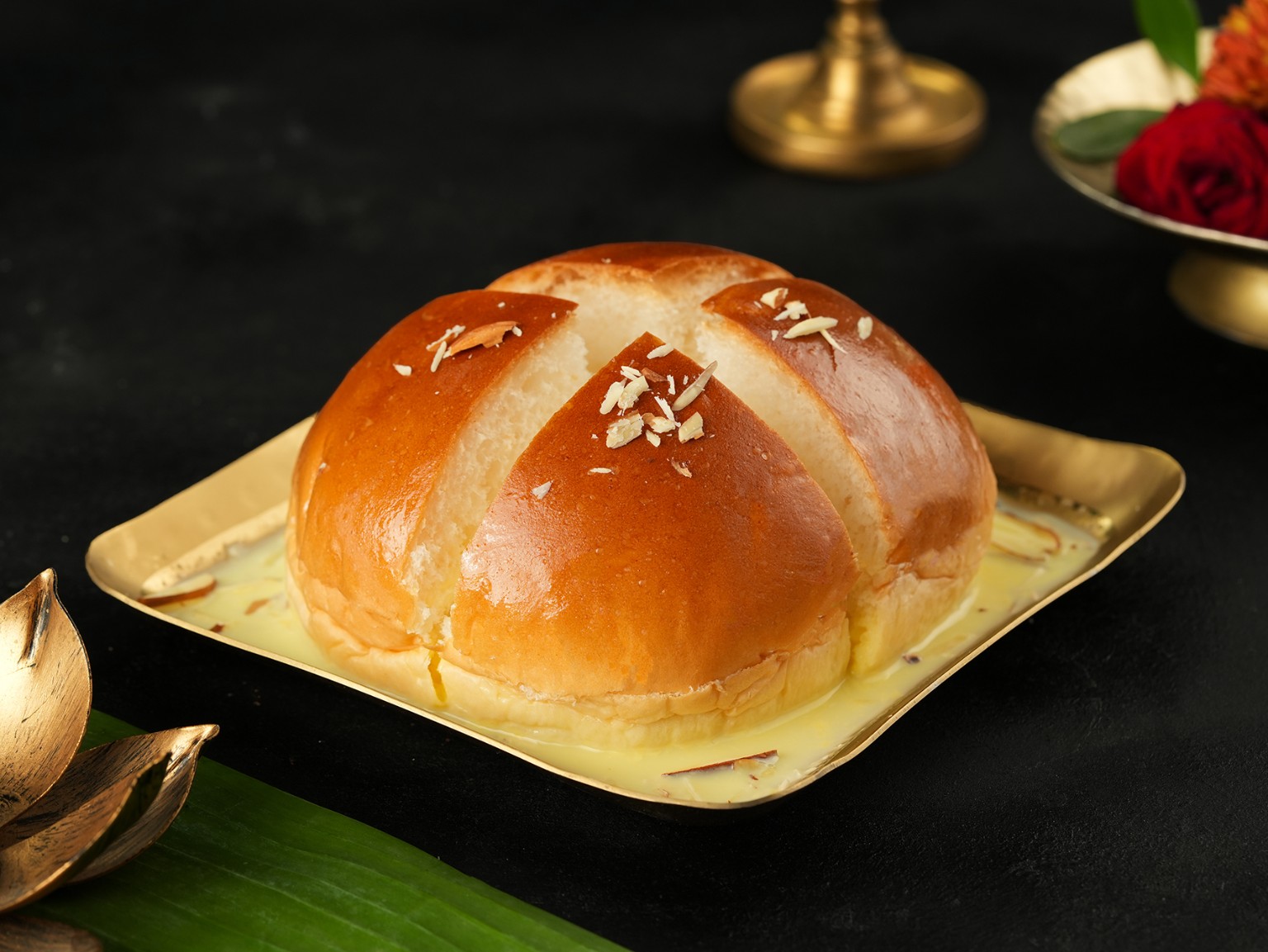
In this pairing, the milk does more than accompany the bread. It supplies the moisture that changes the bun’s texture, while the almonds and spices introduce another layer of flavour. The maska remains essential, bringing richness to the meeting of bread and milk. The preparation depends on these elements working together, with the bun substantial enough to receive the pour and soft enough to absorb it.
There is also an appealing flexibility to where the dish sits in a meal. Its bakery foundation suggests breakfast or a tea-time pause, while the milk-soaked texture gives it the character of something sweet to finish with. The brand’s advertised serving window of 5 a.m. to 1 a.m. leaves room for diners to decide when that particular comfort is most welcome.
Read also: Taj Dasara Dining in Bengaluru
For The Rameshwaram Cafe, the collaboration brings Thirtha’s baking into a preparation that can travel across its wider network. The story begins in Bengaluru, draws on an established Indian café staple and reaches diners through the brand’s outlets across the country. That movement is part of what makes the dish interesting: a recognisable combination is being adapted for a different setting and a broader audience.
The appeal ultimately rests on a small act of transformation. A buttered bun arrives, hot badam milk is poured and the bread begins to soften. Familiar ingredients take on a different character together, giving diners a reason to slow down and enjoy the preparation while it is warm.
Bun maska with badam milk is available across The Rameshwaram Cafe’s outlets in India, according to the brand, with an advertised serving window of 5 a.m. to 1 a.m.