Bengaluru: The release of They Call Him OG was less a cinematic event and more a cultural phenomenon, a “festival” that brought fans to theaters for a shared moment of “mass euphoria.” Written and directed by Sujeeth, a self-confessed fan of his lead star, the film arrived with gigantic expectations, promising an untoned, high-octane gangster thriller. It is a film that, for many, is a paradox: a technical marvel with a wafer-thin story.
From a critical standpoint, the film’s predictable and “half-baked” plot, along with its reliance on outdated tropes like kidnapping a child or killing a wife, leaves a lot to be desired. The narrative is not the star here; it’s merely a vehicle for the “elevation scenes” that celebrate the lead actor’s persona. The original story, which attempts to introduce novelty through an origin story rooted in Japan and incorporating martial arts like Aikido, ultimately serves to mask a familiar gangster arc. The film follows a middle-aged protagonist who returns from exile to protect his loved ones and confront a crime boss. As an audience member, you may feel that this repetition, where every scene serves as a new “entry” for the hero, can be “too much to handle.” This deliberate choice seems to sacrifice narrative consistency for a series of high-impact moments that, once the film has established its protagonist as the “OG,” feel unnecessary and repetitive. A significant portion of critical feedback points to the film’s lack of a solid emotional core, leading to an impact that is “half-baked” even when the film has all the elements of a gangster drama.
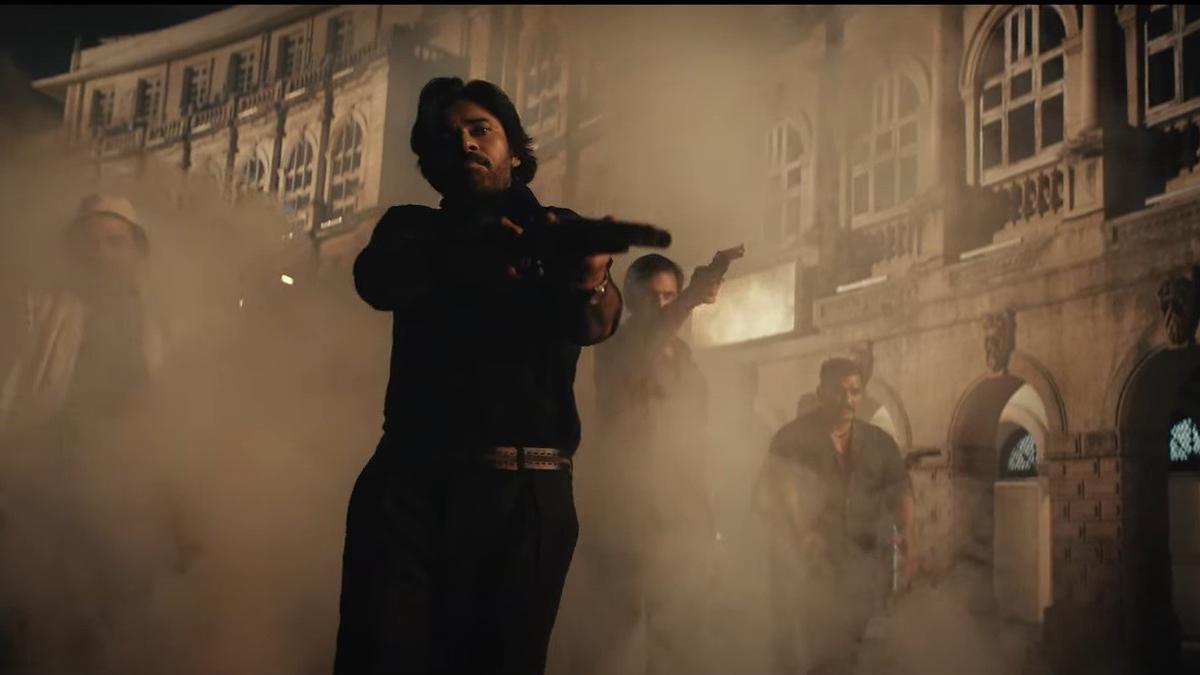
The film’s production was also a prolonged and politically-influenced process, with shooting intermittently halted due to Pawan Kalyan’s political campaigns. This protracted schedule appears to have had a tangible impact, with some critics noting that the film felt like a “patchwork” and suffered from inconsistencies. The final product, despite a staggering ₹250 crore budget, bears the marks of a creation process that prioritizes a star’s availability over the cohesive integrity of the story. The film’s A-rating, the first for Pawan Kalyan in 14 years, further underscores its focus on spectacle, allowing for “raw, gritty action” and a “dark and realistic tone” that caters directly to a mature audience’s appetite for spectacle. This rating, a testament to the film’s brutal content, also leads to the observation that there is “too much bloodshed,” a trend that, as an audience member, you may find tiring in today’s content.
A Spectacle of Stardom and Sound
For a devoted fanbase, They Call Him OG is a feast. The film’s strength lies almost entirely in its technical bravado, starting with the sheer screen presence of Pawan Kalyan himself. He is lauded for his “commanding screen presence” and his ability to dominate the frame with a “simple yet commanding stare,” which some consider his best performance since Attarintiki Daredi. For fans, the film is a “one-man show,” with his powerful presence making up for a lack of dialogue and reduced screen time. His performance is described as an infectious aura that drives the narrative forward.

This star power is enhanced by the film’s technical team, with cinematographers Ravi K. Chandran and Manoj Paramahamsa creating a “visually slick” and “technically brilliant” aesthetic. Critics noted its “John Wick-style aesthetic” and meticulous attention to detail. The most celebrated element, however, is S. Thaman’s “chest-thumping” background score, which is widely described as “roaring” and a visceral force that “breathes fire” into every scene. For many viewers, the BGM is not a supporting element but a “main character” that compensates for the film’s narrative shortcomings. The film’s success is not driven by its plot but by a carefully constructed sequence of audio-visual “elevation moments” that induce “mass euphoria.”
In contrast, the reception for Emraan Hashmi’s Telugu debut as the antagonist, Omi Bhau, is markedly conflicting. At times we can hail him as the “show stopper” who delivered a “fantastic job.” However, it can also said that his character is a “cardboard villain” who appears “lost and disinterested” due to “lacklustre Telugu dubbing.” This disparity can be directly attributed to a common issue in hero-centric films: the underdevelopment of the antagonist. The film’s creative choices sacrificed a compelling hero-villain dynamic for more hero-centric elevation scenes, which left Hashmi’s character underwritten and his performance appearing diminished. The supporting cast, including Sriya Reddy, Arjun Das, and Prakash Raj, received solid praise, with Sriya Reddy’s portrayal being noted as “brilliant” and “fearless.” Arjun Das also received a special mention for a “meaty flashback portion that makes the second half tolerable,” showcasing his ability to elevate a scene beyond the star vehicle’s limitations. I shall not speak about the heroine Priyanka Mohan who is seen for a maximum 15 mins.
READ ALSO: Beyond the Benne Dosa: Bengaluru’s Breakfast Revolution and the Monkey Bar Manifesto
A Final Thought on the State of Cinema and AI
The cinematic experience is changing, and discussions around films like OG raise broader questions about the role of technology. AI’s growing presence in filmmaking is a point of concern for some, as it has the potential to strip away the authenticity and human touch that define great art. While AI can improve efficiency and enhance special effects, it often produces content that lacks the emotional depth and originality that comes from human ingenuity.

The use of AI for tasks like upscaling can result in an “overly polished” visual style that removes the “raw appeal” of the original media, leading to a “too clean to be real” look. This could diminish the “co-creation” that happens in an audience’s imagination when engaging with art that is less than pristine. AI can also affect scriptwriting, where it may follow established tropes and structures but lack the “depth and unpredictability that define great storytelling.” It can assist with generating narratives and dialogue, but it may struggle to handle the complexity of human emotions and capture human nature. The fear is that as AI becomes more prevalent, it will lead to formulaic narratives and a decline in artistic authenticity. As audiences, we are already growing tired of the unthinking, excessive violence in our content, and the rise of AI could further diminish the soul and unpredictability that makes watching a movie a truly human experience.