Bengaluru: How we remember the past is never a neutral act. For centuries, mainstream narratives of Indian history have suffered from a distinct double-blindness—they have remained overwhelmingly centered on the grand, imperial courts of the global North while pushing the sophisticated, multipolar world of the Deccan Sultanates to the periphery. Even more glaring is the systemic erasure of South Asian female Muslim voices, whose political authority and military command are frequently flattened into modern stereotypes of quiet seclusion or tragic passivity.
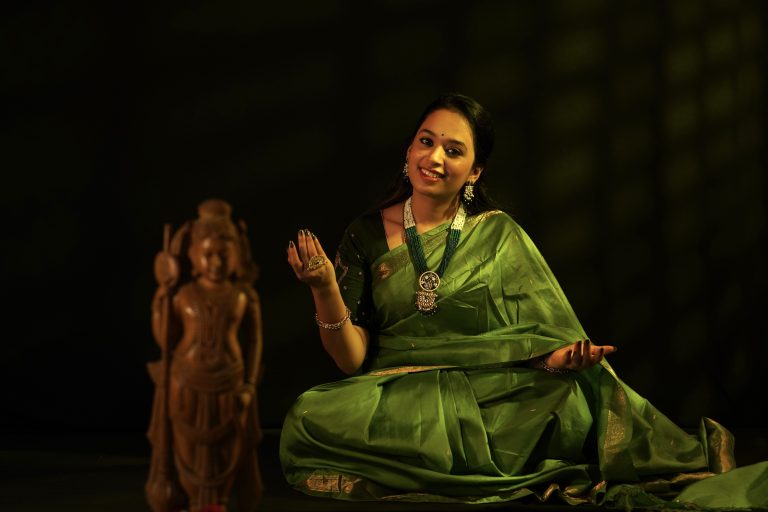
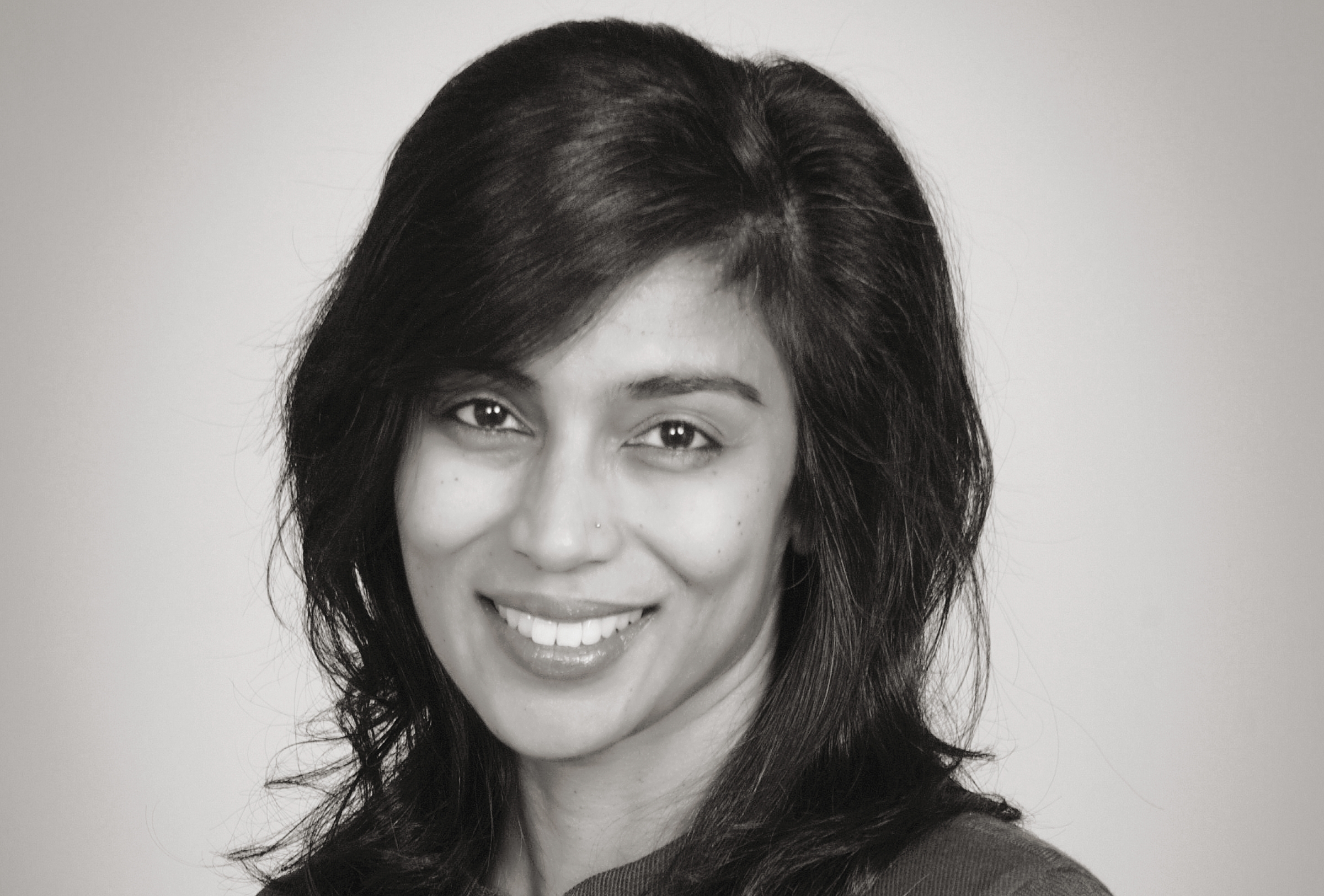
Flipping this script with profound academic rigor and stunning narrative prose is Dr. Sarah Waheed, Assistant Professor of History at the University of South Carolina and a specialist in South Asian Islam. Following her acclaimed debut work Hidden Histories of Pakistan, Dr. Waheed’s latest historical investigation serves as a powerful act of archival recovery. Supported by a Fulbright-Nehru Award and a Stanford Humanities Center Fellowship, her research spans the Salar Jung Museum, the Telangana State Archives, and vernacular Urdu collections to piece together the fragmented, contradictory legacy of Chand Bibi—the formidable 16th-century queen-regent of Ahmadnagar who united rival factions and successfully defended her homeland against Mughal imperial expansion.
We sat down with Dr. Sarah Waheed to discuss her spirited quest through the land of her ancestors, the deliberate erasures within medieval male-dominated chronicles, and why centering the narrative in the Deccan fundamentally transforms our understanding of sovereignty and historical memory today.
Your previous book, Hidden Histories of Pakistan, focused on 20th-century secular nationalism, literature, and censorship. What drew you to pivot centuries backward into the medieval Deccan Sultanates, and did your background in analyzing how histories are hidden change how you approached the gaps in Chand Bibi’s archive?
My earlier work took me into the violent heart of the twentieth century, which is so close to us in time. The traumas of the twentieth century—like colonialism, Partition, censorship, war, authoritarianism—continue to shape our contemporary world and our most intimate political realities. I wanted to reach farther back into the past, into a world that existed before the advent of British colonialism and the categories it imposed on South Asia.
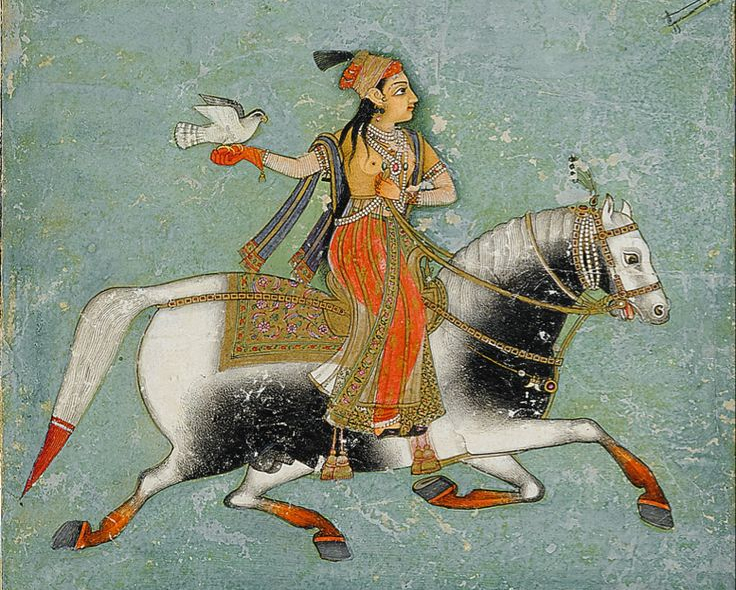
An 18th-century equestrian portrait of Chand Bibi. The viral iconography of the queen with a hunting falcon serves as a powerful masculine visual language of sovereignty, mobility, and regional defiance against northern imperial expansion.
As a Hyderabadi Muslim, I had long been captivated by the world of medieval and early modern Deccan. I grew up with so many stories and history about the Qutb Shahi dynasty and old Hyderabad. When Chand Bibi stepped into my life, I knew it was time to delve more deeply into this world. Chand Bibi belonged to a political and cultural landscape that was Persianate, Indic, regional, and deeply inter-connected. It was a world in which Muslim women exercised political authority, commanded armies, negotiated alliances, shaped cultural life, and inhabited sovereignty in ways that modern assumptions often render unimaginable.
At the same time, the forces of colonialism, capitalism, and the modern nation-state, have produced the archives we inherit, the categories we use and even the kinds of histories we are taught to recognize as important. They have shaped how Islam and Muslims are remembered in India—often through suspicion, communal binaries, or narratives of conquest, decline, and oppression. My earlier work on censorship made me attentive to erasure, but with Chand Bibi I had to think about erasure across a much longer span, to consider how a powerful Muslim woman was remembered in folklore, paintings, and local oral traditions, yet marginalized in mainstream history.
As an Assistant Professor of History in the United States who frequently travels back to India for field research, how does looking at South Asian history from a global distance shape your perspective?
I don’t think I have ever looked at the past from only one place. My perspective has always been shaped by movement: between India and the United States surely, and also by way of the Middle East, which has been important to my family life and upbringing—as it has been for many Hyderabadis.
ALSO READ: The Great Egg Rebellion Why Benedict’s is Rewriting the Rulebook on All Day Breakfast in JP Nagar
In this sense, being Hyderabadi matters deeply. I grew up visiting and staying in Hyderabad often and regularly, as well as traveling to countries such as Spain and Turkey. Hyderabad has long been a place that was profoundly pluralistic and globally interconnected. To be from Hyderabad is already to inherit a sense of the world as layered, multilingual, and connected beyond the nation-state. So, my perspective is both global and intimate. I write from afar, but also from a sense of Hyderabadi historical consciousness. Chand Bibi’s world was never sealed inside one nation, one language, or one religion. It was a world of movement and layered belonging—something Hyderabad, at its best, still teaches us how to imagine.
Living and teaching in the US means that I encounter South Asian history in global frames: empire, migration, Islam, caste, nationalism, gender, and colonial knowledge production. That perspective helps me see how histories travel, how they are read outside South Asia, and how easily they can be flattened. At the same time, as the third most populous country in the world, the US is home to many diverse communities of people from all over the globe. My close friendships with people from many Asian countries who speak different languages, has helped me to better understand South Asia in global contexts. Of course, field research in India always brings me back to the texture of life there, especially the way memory survives in neighborhoods and local communities. In some ways, I write between places. That position can be difficult, but it is also productive.
You’ve mentioned that this project took you through the land of your ancestors in the Deccan. Did this research ever feel less like a clinical academic exercise and more like a personal act of mapping your own heritage?
Certainly. My family roots in Hyderabad shaped the emotional beginning of the project. I grew up hearing stories about the Hyderabad from my parents and extended family, stories of decline, longing, loss, survival, and courage. Following Chand Bibi across the Deccan became a way of mapping a larger historical world, yet my itinerary was often also shaped by family memory of places and people. I looked closely at what kinds of histories are preserved at home, and what are preserved in official archives, and in ruins, folklore, and paintings. Women’s stories often survive first in intimate spaces, in family drawing rooms, in oral memory, and in fragments that formal history has not always valued. It was important to me to invoke the stories of my aunts and grandmothers, not in a self-indulgent way, but as a way to make sense of how our entry point into the past is not severed from who we are and our own personal histories.
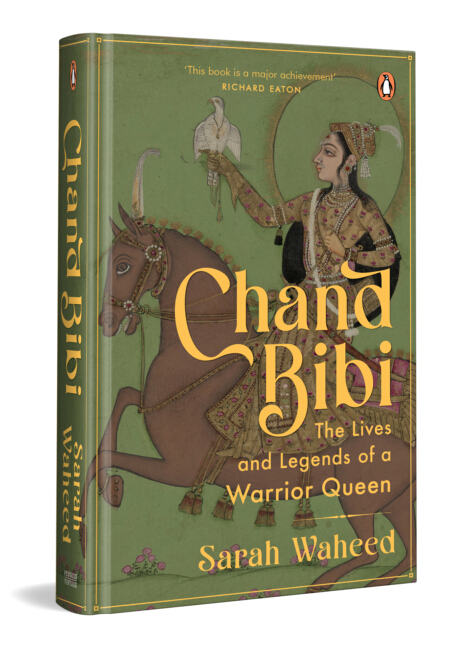
Part of what I wanted to do in this book was move away from the idea that history can only be written from a place of detached neutrality. Many historians have been taught to adopt a posture of standing outside the past, as though one were an objective and all-seeing observer. But that is itself a historically produced way of writing. It is not neutral. It carries its own assumptions about knowledge, authority, evidence, and feeling.
There is a Eurocentric inheritance in modern academic historical method that often demands the historian to disappear from the page, or to write as though the past can be mastered from above. There is also a pretense embedded in that style. The author becomes almost omniscient, able to see arrange, and interpret everything while concealing the motivations and attachments that brought them to the subject in the first place. I wanted to resist that—not by abandoning evidence or rigor, but being more honest about the stakes of historical writing.
Why does a historian choose one subject and not another? What is moving them? How does our identity (across class, gender, race, religion, and caste) also shape where and how we can travel and in what ways, and how archival institutions perceive us? These questions matter. They shape how we enter the archives and the silences we notice, and what stories we are willing to share. Hyderabad, Gulbarga, Bidar—these were not abstract historical sites, but were preserved in family memory, since these places are no longer geographically, politically, and spiritually connected in the ways they were a century ago, before the Partition of India, and during my grandparents’ youth. The book became a way of mapping not only Chand Bibi’s world, but led me directly to women’s stories that survive in my family.
For a long time, military and political history was a heavily male-dominated field, focusing on the mechanics of battle and statecraft from a masculine viewpoint. Do you feel that being a woman author changes the way you look at a medieval battlefield or a queen’s political strategy?
I would not say that women automatically write history in one particular way. But I do think being attentive to gender relations as power relations changes the questions a historian asks of a battlefield or a court. Traditional military history often focuses on troop movements and weapons. Many serious historians would now agree that warfare was also about kinship, rumour, honour, and the movement of information between spaces coded as male and female. Political strategy around military conflicts in medieval and early modern India cannot be fully understood by only the battlefield, but how that space intersects with the zenana, diplomatic marriage, succession crises, and networks of trust.
Chand Bibi was a military strategist, but she was also a regent, aunt, widow, sister, diplomat, and sovereign. Those identities were not incidental to her power. Paying attention to gender does not “soften” the history of war, but actually sharpens it by giving us a fuller and more complete picture of who participated and how.
Fellow historian Ira Mukhoty praised your book as part of a “great new wave of writing that questions the erasure of South Asian female Muslim voices.” Why do you think it is women historians who are leading this specific charge right now, and what unique hurdles do women authors face when trying to resurrect historical women whose voices were minimized by medieval male chroniclers?
In her 2008 introduction to Inscribing South Asian Muslim Women, historian Tahera Aftab wrote that “not only are studies on Muslim women scarce, but when Muslim women do appear they seem to be overwhelmingly portrayed as being oppressed and backward. Therefore, the exclusion of South Asian Muslim women from key texts on the subject erases the historic persona and agency of Muslim women, while the sparse and stereotypical representation of them is completely inadequate.”
Today, many more Muslim women from South Asia are writing seriously about the past than earlier. Generally, I think historians who take gender seriously, are asking questions that even a generation or two ago, were dismissed by historical scholarship as secondary or irrelevant. We are asking about how power was exercised, remembered, gendered, and erased. We are also asking how to recover women’s agency without romanticizing them.
There are several hurdles: many sources were often produced by men, for male patrons, within male-dominated literary and political worlds. Even when powerful women appear, it is often through anxiety, scandal, moral judgment, or metaphor. The task is not simply to “add women” to history, but to read archival sources for what they might tell us about gender relations at the time.
Historians who are women also face present-day hurdles. Of course, not all of us write on gender and certainly not only on gender! There is a tendency to see gendered histories as mattering only to a small subset of concerns, rather than speaking to larger political phenomena or epistemological frameworks.
Writing history as a Muslim woman can be challenging in a political era of global Islamophobia, as we are perceived as either oppressed or threatening, and our scholarly authority is frequently undermined in various institutional contexts.
Historian Richard Eaton compares your research process to that of a detective tracking down living memories and fragmented written sources. What was the single most elusive piece of evidence you hunted for, and where did you finally find it?
I was not searching for one document that would “solve” the mystery. Instead, the elusive evidence was a pattern that emerged across contradictory accounts of murder, suicide, and escape. Often times, I felt like Alice in Wonderland. The deeper I traveled into the past, the more the world beyond the looking glass became more wonderous and alive.
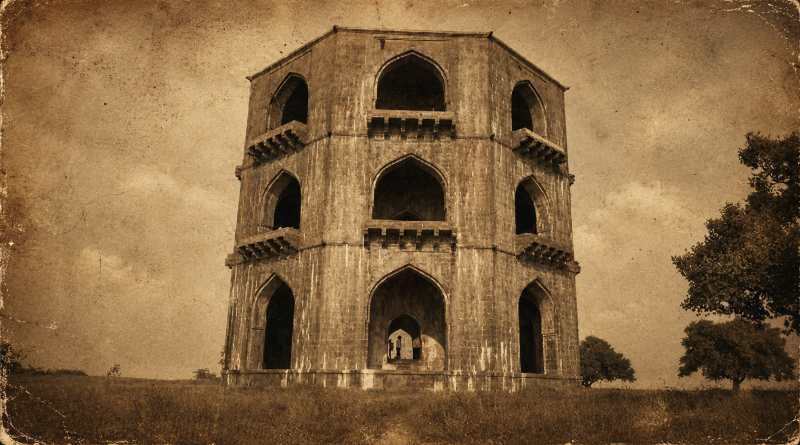
The Tomb of Salabat Khan II in Ahmadnagar, popularly revered in regional folklore as Chand Bibi’s Mahal. Perched high on a windswept hill, this three-story octagonal stone structure stands as a physical testament to the sophisticated architectural landscape of the 16th-century Deccan Sultanates.
One of my favorite moments was when I went in search of a hilltop mentioned in a century-old written account. The source stated that peasant women came to honor Chand Bibi as a saint-goddess figure, by placing flowers, bangles, and bits of cloth and color over the queen’s grave. When I finally tracked down the hillside thanks to a local history enthusiast in Ahmadnagar, we found that this place still does exist, and that rural women come every Thursday and Friday to honor the local saint, Chand Bibi, and a woman by the name of Dasa Bai ‘teeli-vaali’, a poor low-caste oil presser. The link between these two women, one a Muslim queen and the other a low-caste woman and the Sufi saint atop the hill who gives them refuge, is about shared narratives across communities. Villagers—Hindu, Muslim, Chamar—also gather here to celebrate Holi. These kinds of shared spaces across different religious communities that characterized India for centuries are fast disappearing, but here, Chand Bibi, Dasa Bai, and the unnamed saint co-exist in the same cosmological geography. It was a glimpse into an India long before identities were colonized and partitioned. It was a powerful experience.
Your research spans the Salar Jung Museum, the Telangana State Archives, and Urdu literary archives. What distinct flavors of Chand Bibi did you encounter when shifting between official state records and vernacular Urdu oral or literary traditions?
Different archives gave me different Chand Bibis. In official elite sixteenth and seventeenth century Persian historical records, Chand Bibi often appears as a queen-regent, diplomat, strategist, or sovereign. In eighteenth and nineteenth century visual archives, she becomes the falconer. The falcon on her arm tells us so much about kingship, discipline, mobility, and command. In twentieth century Urdu literary and oral traditions, still another Chand Bibi emerges. She becomes exemplary but also domesticated. These sources preserve what Chand Bibi meant to later communities, especially in reform debates about women, respectability, and public life. In one 19th century Portuguese account, Chand Bibi appears as the tragic beloved of a Portuguese soldier, Salabate, rather than a military commander in her own right. We have to ask about the motivations of these sources. The challenge was not to choose one Chand Bibi and discard the others. It was to understand why she appeared differently in different historical registers.
Mainstream Indian history often treats the Mughal court as the absolute center of gravity for the 16th century. How does centering the narrative in the Deccan Sultanates fundamentally change our understanding of sovereignty and political power during this era?
Seeing the past along the lines of empire is alluring. In popular history, empire is easy to narrate, because it has the familiar arc of rise, consolidation, decline, and collapse. It promises grand openings and tragic endings. There is comfort in narrative closure. The Mughal court has become the privileged arena of historical imagination, a richly textured and theatrical world, which can be repurposed endlessly. Tales of Mughal emperors, whether true or not, are embedded into the popular psyche. Empire is easier to market in popular culture. Even when writers try to complicate it, its gravitational pull remains. Yet most of India’s past over five millennia, was not determined by empires, they were few and far between.
In empire-centered histories, a figure like Chand Bibi tends to be seen as an exception, a bold woman briefly interrupting the “real” story of Mughal imperial expansion. Sovereignty without imperial ambition is rendered secondary. From this point of view, the Deccan becomes a prelude to Mughal absorption rather than a political world of its own.
When we center the Deccan, the sixteenth century looks much less like a story of inevitable Mughal expansion and much more like a contested, multipolar world. The Deccan Sultanates were powerful, cosmopolitan, multilingual, militarized, and culturally vibrant. They were centers of great artistic and intellectual achievements. They were connected to the Indian Ocean, to Persianate networks, to local warrior lineages, and to multiple religious and linguistic communities in Hindustan. The Mughals were confronting sophisticated regional powers with their own histories, ambitions, and political cultures.
In fact, there was a great deal of cultural transmission from the Deccan Sultanates to the Mughal north in the form of traveling artists, courtiers, objects, albums, and paintings. Movement from the Deccan to the Mughal north carried Deccan’s music theory, Sufi poetry, luxury crafts, and courtly habits into Mughal political and cultural life.
Writing without empire as the main frame is actually harder. Chand Bibi’s story reminds us that empire was resisted as well as negotiated, and that there were sophisticated Indo-Islamic worlds beyond the Mughal court.
There is a pervasive modern assumption that premodern Muslim women were entirely secluded behind the veil, completely removed from statecraft and warfare. How does Chand Bibi’s active role as a diplomat and military strategist directly smash this monolithic stereotype?
European Orientalism has been powerful and pernicious. Its flawed ideas about Muslim women’s seclusion—which justified colonialism—continue to shape assumptions about the past in India’s national histories. The prominent twentieth century orientalist Bernard Lewis once wrote that there were no queens in Islamic history. Globally, several Muslim women ruled in different societies and times and places. The more I looked, the more I found. Their stories, like Chand Bibi’s, makes stereotypes about Muslim women’s veiled seclusion impossible to sustain.
Chand Bibi does not simply prove that one exceptional woman broke the rules. Her life asks us to rethink the rules themselves. The harem was not an inactive domestic space. It was a political institution, a site of administration, knowledge production, diplomacy, alliance-making, and surveillance.
The problem lies in the modern assumption that seclusion meant powerlessness. In many royal contexts, access to enclosed spaces could itself be a form of power. Chand Bibi moved across multiple worlds: harem and court, battlefield and diplomatic chamber, kinship and sovereignty. Her story rebels against the stereotype and exposes how historically shallow that stereotype has always been.
You’ve noted that 18th-century portraits of Chand Bibi hawking with a falcon went “viral” across India. Since falconry was traditionally a hyper-masculine symbol of sovereignty, how do you read the gender fluidity and power dynamics in these specific paintings?
The falcon is one of the most enduring aspects of Chand Bibi’s afterlife. Falconry and hawking were associated with aristocratic training, kingship, command, and the ability to control powerful forces. In Persianate political culture, it was not only a sport, but was a metaphor for rule—falconry was a significant aspect of the political education for princes. So, when Chand Bibi is repeatedly depicted on horseback with a falcon on her arm, she is being placed within a visual language of sovereignty that was typically coded as masculine. The falcon itself is also suggestive. It flies away and returns, which resonates with the legends of Chand Bibi’s escape and imminent return.
Why did this iconography go viral in the eighteenth century? Mughal political power from the north was in political decline during this time. Vibrant regional successor states emerged. These regional states patronized cultural works, including paintings. Chand Bibi’s memory of defiance against Mughal power—as a falconer a sovereign—would have been attractive for rulers as they themselves began to assert their own regional autonomy.
Fascinatingly, historical accounts suggest Chand Bibi’s entire zenana (harem) formed a highly sophisticated government of its own, featuring female astrologers, jurists, physicians, and scribes. Could you paint a picture for us of what daily political operations looked like within this female-led intellectual ecosystem?
I would begin by moving away from the popular fantasy of the harem as a place of idle eroticism. All across the Islamic world, there were women who held different kinds of occupations. Take medicine and the healing arts. Muslim women were not categorically barred from medical knowledge the way they later were in Europe, and their medical authority was less aggressively monopolized by men. There is a documented female physician in the Mughal empire, who was a polymath named Sati-un-Nisa (d. 1646), and was instrumental in Princess Jahanara’s education.
A day in the space of the royal zenana would have included women who held many different occupations: attendants, painters, guards, soldiers, wet nurses, scribes, messengers, accountants, religious specialists, astrologers, physicians, musicians, teachers, and women of rank negotiating influence. Information moved through servants, slaves, and female retainers. Political decisions emerged through the household—a major theater of political power—through alliances and patronage. Urdubegis, armed female retainers, were regular features of Indo-Muslim armies.
Recent historical scholarship has shown that women were also literary patrons in the Deccan courts, and literary patronage was a major component of state-craft. They were also scribes and female courtiers, like one who visited Chand Bibi’s brother, Murtaza Nizam Shah and who traveled between the Deccan and what is now Iraq. This was a highly mobile world, and the harem was constantly on the move between capitals, forts, and suburban palaces.
What would a day in the life look like for a woman who was a falconer, a courtier, a scholar, a scribe, inn-keeper, physician, or slave? It is more difficult to historically reconstruct the lives of people beyond queens, or those lower in hierarchy, especially women who were enslaved, but we can begin by acknowledging that a queen like Chand Bibi was surrounded by women who held many different occupations, transmitted specialized knowledge, and were experts in their respective fields. A day in her zenana would have included ritual prayer, artistic practice, management of public works, meetings with courtiers, hunting—all of which included women.
Chand Bibi wasn’t just a warrior; she was a brilliant negotiator who managed to unite fractured Deccan sultanates to stand against Akbar. What was her diplomatic “secret weapon” in managing the massive egos of the rival Deccani sultans?
Yes, Chand Bibi did not merely defend a fort. She defended Deccan sovereignty in a world of empires, factions, ports, trade routes, and sea power. She was a rival to Mughal sovereignty. Mughal expansion sought political supremacy over the Deccan. Chand Bibi ruled amid overlapping pressures: Mughal armies, competing sultanates, court factions, and Portuguese power on the western coast. The Indian Ocean world mattered. Through Goa and several ports, the Portuguese became a naval force. Weapons, trade access, and diplomacy moved through maritime networks. This made Chand Bibi politically dangerous for Akbar. A Deccan ruler who could negotiate beyond the Mughal court—with regional powers and maritime forces—challenged imperial claims to monopolize diplomacy. Chand Bibi was a sovereign strategist in an interconnected Indian Ocean world, where diplomacy, commerce, and resistance shaped the fate of the Deccan.
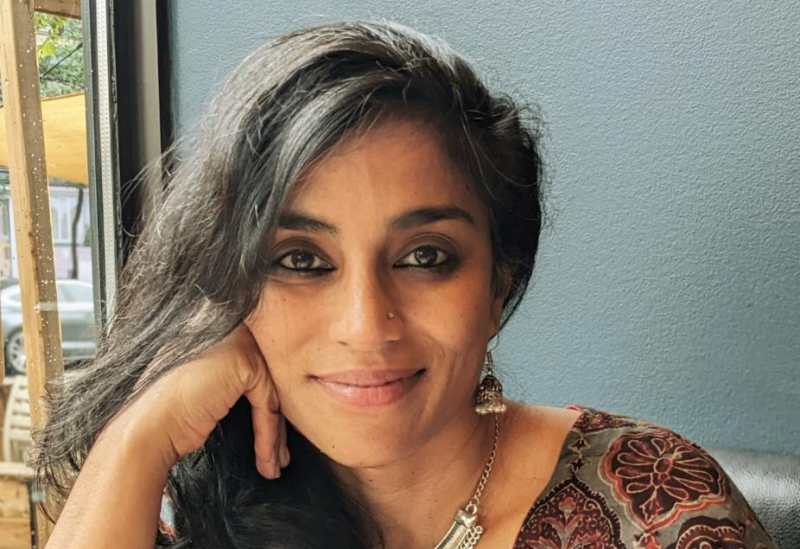
Dr. Sarah Waheed, Assistant Professor of History at the University of South Carolina, whose latest research explores historical memory, archival recovery, and the sovereign legacy of Chand Bibi in the 16th-century Deccan Sultanates.
Her “secret weapon,” if we can call it that, was her position at the crossroads of Deccan politics and her intelligence in using it to her diplomatic advantage. Chand Bibi was dynastically connected to three powerful Deccan sultanates, in a world where kinship and sovereignty were deeply intertwined. She understood the language of power in multiple courts. She knew how to appeal to family, honour, regional survival, and political necessity. She also understood timing. Diplomacy in her world was not simply about an idealized unity. It was about making rival powers recognize that Mughal expansion threatened them all. Chand Bibi’s prowess lay in her ability to recognize that the Deccan’s survival depended on coordination, even among rulers who did not naturally trust one another. That kind of diplomacy required patience, authority, and tactical intelligence.
The book tackles the deep contradictions surrounding her end—was she murdered by mutinous troops, did she choose martyrdom, or did she escape through a legendary underground tunnel? Why do you think history—and local folklore—felt the need to invent so many disparate versions of her exit?
In Chand Bibi’s case—as for many women from the past—the historical record itself is layered, contradictory, and often shaped by the political context of those who remembered her. There are three major accounts of her demise: murder, suicide, and escape. Rather than deciding which one was “true” and discarding the others, I treated each of them seriously, and asked what each telling reveals about the people who narrated it. Folklore may not always give us factual certainty, but it can reveal the emotional and political life of the past. My task was to distinguish between evidence and invention, yes, but also to understand why certain narratives persisted for centuries.
The murder narrative is stark and tragic. It demonstrates the brutality of factional politics as many political actors south the throne, and the danger of betrayal. The suicide martyrdom narrative transforms her death into a story of honour and territorial pride. The escape narrative was circulated by peasants and other marginalized peoples, speaks of hope and refuses closure altogether. It imagines that Chand Bibi could not be contained by defeat, that she vanished into tunnels. All these narratives exist in written documents from the sixteenth and seventeenth century, shortly after Chand Bibi’s final confrontation with the Mughal army.
I do not see these competing versions as errors. They are historical evidence of another kind. They tell us how different communities processed political loss, conquest, admiration, and longing. Chand Bibi’s demise became a canvas onto which different peoples projected anxieties and aspirations about gender, honour, loyalty, empire, and survival.
When writing narrative history, how do you balance the strict boundaries of academic historical evidence with the vibrant, living folklore of a region that refuses to let a hero die?
The key is to be honest about what different kinds of sources can and cannot do. A 16th century Persian history or inscription, an 18th century painting, a 19th century British colonial officer’s novel, a 20th century Urdu play, and a contemporary oral legend do not offer the same kind of evidence. They have to be handled differently. I do not think folklore should be completely dismissed because it does not behave like an official document. Folklore tells us what mattered to people. It preserves attachments, fears, hopes, and local claims to the past. In Chand Bibi’s case, folklore kept her alive when formal histories marginalized her.
For example, there are many legends and stories from India’s past about rulers or rebels who escaped through secret tunnels. It is a popular trope, so frequently the stuff of legends, that academic historians are immediately suspicious about it. I suspended my disbelief, and let the tunnels themselves operate as a kind of method and metaphor for my search of Chand Bibi. And, I found that the narrative around Chand Bibi’s escape through underground tunnels also existed in an official document within only two decades after she ruled.
I think the balance lies in making distinctions without creating hierarchies that automatically privilege written elite sources over living memory. In my book, I try to tell readers, here is what the chronicle claims, here is what the painting suggests, here is what the oral tradition remembers, and here is what we can responsibly infer. Narrative history allows one to hold those layers together without collapsing them into a single flat truth.
At a moment when medieval Muslim figures are increasingly pushed to the margins of public history in India, what does the deliberate recovery of Chand Bibi’s story teach us about the vulnerabilities of our current public memory, and what do you hope modern readers take away from her life?
Public memory can be narrowed very quickly by state-sponsored ideology, nationalism, and communal politics, weaponizing the past into heroes and villains for present day agendas. Medieval Muslim figures in India are often reduced to barbaric invaders to stand in for present-day political battles. Alternately, they may also be over-romanticized. That leaves very little room for complexity.
Chand Bibi resists that flattening. She was ruler of the Deccan who defended her homeland, negotiated across religious and regional worlds, and belonged to a cosmopolitan society. She was a Muslim queen who defied a Muslim emperor. Her story does not fit neat Hindu-Muslim communal binaries.
I hope readers come away with a different sense of the past: one in which Muslim women were not merely hidden behind veils, the Deccan was not peripheral, and sovereignty was not only the story of male emperors. Chand Bibi reminds us that India’s past was more plural, more wonderous, more mobile, and inhabited by more powerful women than we have been taught to imagine.
Dr. Sarah Waheed’s exploration of Chand Bibi does far more than dust off a forgotten biography; it actively challenges modern readers to re-examine the very framework of historical truth. By treating oral folklore, missing archival patterns, and majestic paintings with the same intellectual respect as state chronicles, she successfully cracks open the rigid boundaries of modern historiography.
Her book stands as a stunning, necessary addition to South Asian scholarship—proving that women rulers were central to the geopolitical and intellectual landscapes of premodern India. For anyone looking to understand the true, pluralistic depth of the Deccan Sultanates, or seeking to witness how a real historical detective unravels long-held cultural myths, Dr. Waheed’s work is an absolute masterpiece that will linger in your consciousness long after the final page is turned.