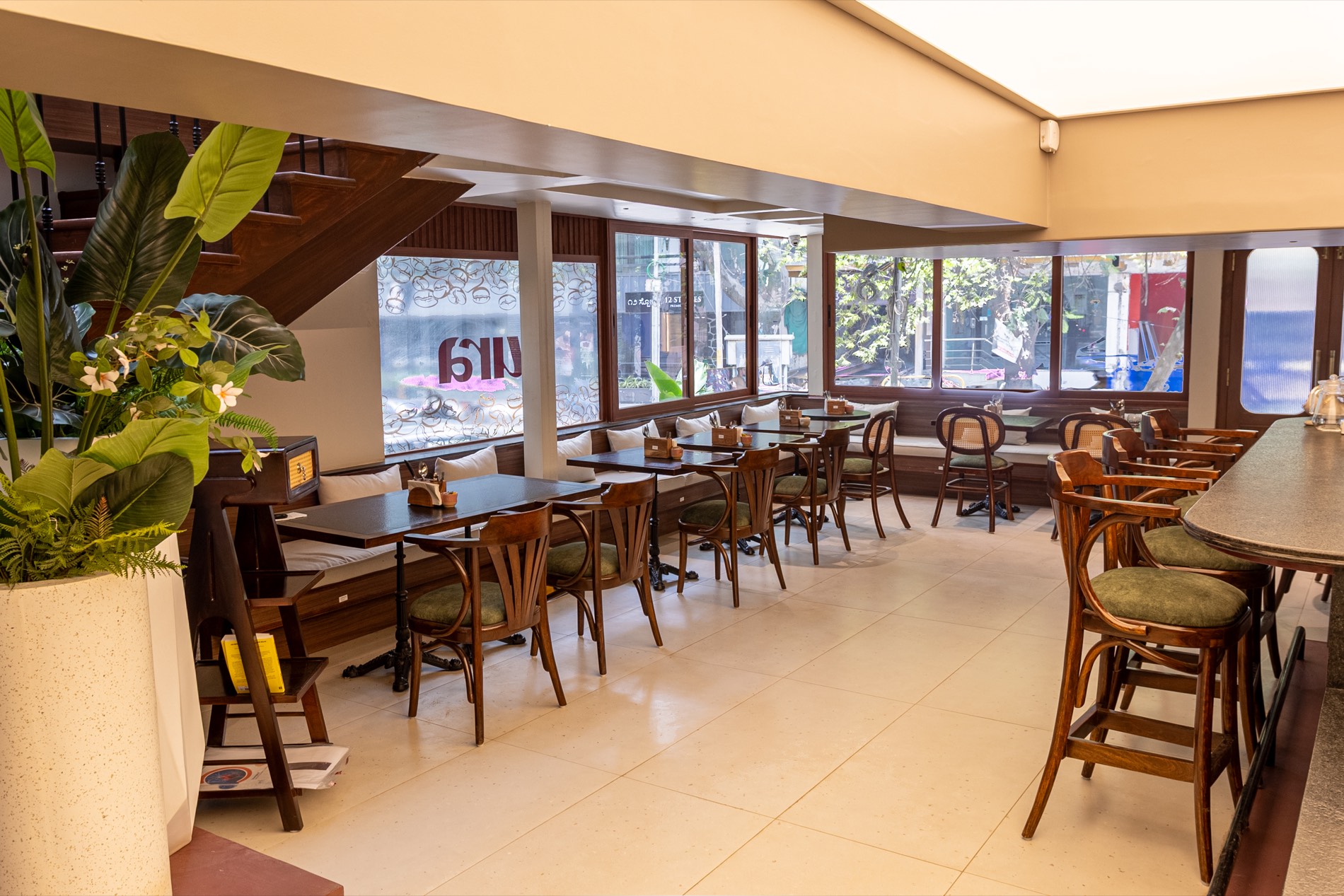
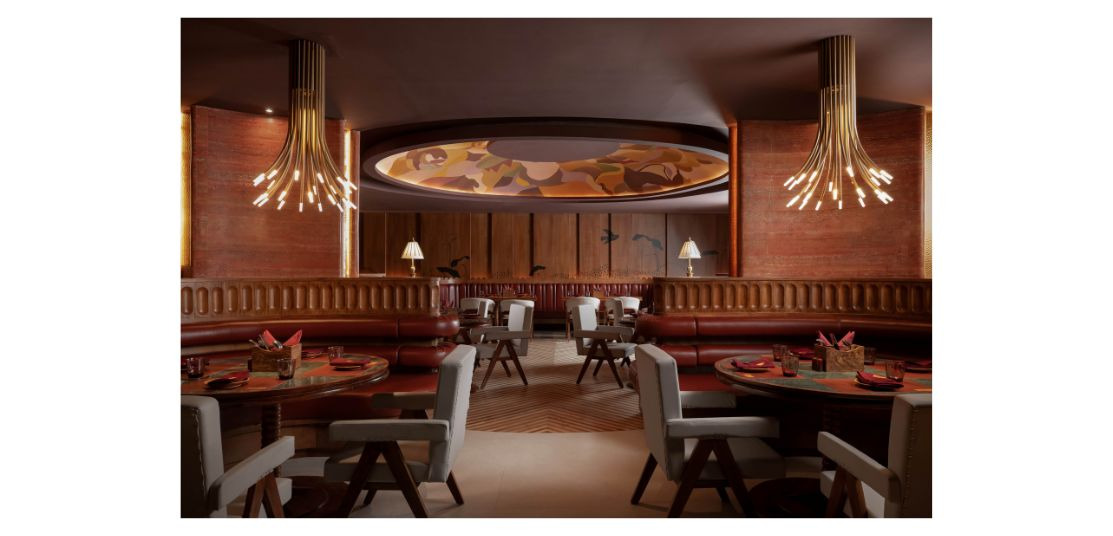
Featured photograph: Kura’s front dining room, Indiranagar. Photo: Kura.
Bengaluru does not have a shortage of restaurant openings. If anything, the problem is the opposite. Every few weeks brings another café with excellent lighting, another bar promising “ingredient-led cocktails” and another dining room designed to look suspiciously good in vertical video. The more useful question in September 2026 is not what has opened, but what is actually worth crossing Bengaluru traffic for.
The encouraging answer is that some of the city’s dining addresses are moving away from the old everything-for-everyone restaurant model. The most interesting restaurant concepts are built around a specific point of view, whether that is serious coffee, regional cooking, low-alcohol cocktails or an almost obsessive approach to pizza dough.
So this is not an exhaustive list of everything that has opened. It is our September shortlist of Bengaluru restaurants, cafés and bars, combining recent launches with established addresses that give you an actual reason to care.
DRUMA, Jayanagar
If there is one new opening that feels particularly of the moment, it is DRUMA in Jayanagar. The 60-cover vegetarian restaurant was announced in September with what it describes as a “produce first” philosophy, placing vegetables, grains and legumes at the centre of the menu rather than treating vegetarian food as an imitation of something else. The menu is deliberately difficult to box into one regional category. Ghee Roast and Gongura Paneer Koora sit alongside Mapo Tofu, Thai Curry and Mushroom Ricotta Ravioli, while dishes such as Corn Saag Quesadilla and Kathal Biryani play with familiar ingredients without disguising what they are.
That restraint is what makes Druma more interesting than another restaurant promising “modern vegetarian cuisine”. Bengaluru has seen plenty of elaborate plating and theatrical tableside moments; Druma’s proposition is almost the counter-trend. Good ingredients, recognisable flavours and contemporary cooking without insisting that every plate needs to become content. The restaurant’s contemporary interpretation of Kannada and South Indian design references strengthens the sense that this is a place thinking about where it is, rather than simply importing a global restaurant aesthetic.
Serious Slice, Indiranagar
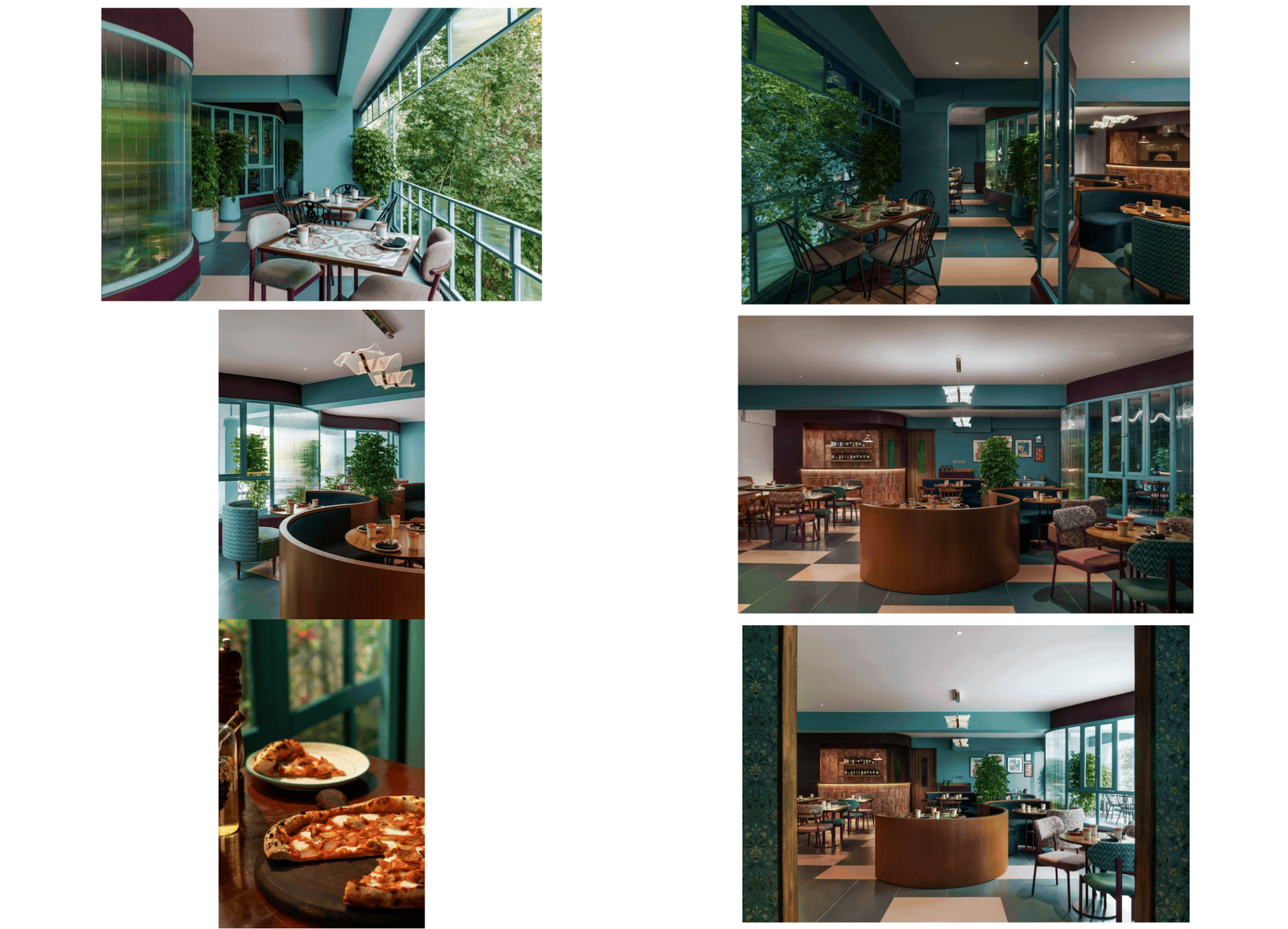
Indiranagar, predictably, has managed to produce more than one contender. Serious Slice has opened its third Bengaluru location on 12th Main, but this is more than the same pizza moved into another pin code. The new 1,600-square-foot restaurant adds an open pizza kitchen, balcony seating and the brand’s first wine programme, while continuing to build its pizzas around dough fermented for 72 hours. The new outlet was announced in August.
The appeal here is focus. Bengaluru does not require another enormous Italian menu that happens to serve pizza somewhere around page five. Serious Slice has spent its energy making fermentation, wood-fired pizza and now wine the reason to visit. A Margherita built around San Marzano tomatoes, buffalo mozzarella and olive oil may not be the most novel thing on Instagram, but that is rather the point. Sometimes what a city needs is not a cleverer pizza; it is someone taking a simple one seriously.
Kura, Indiranagar
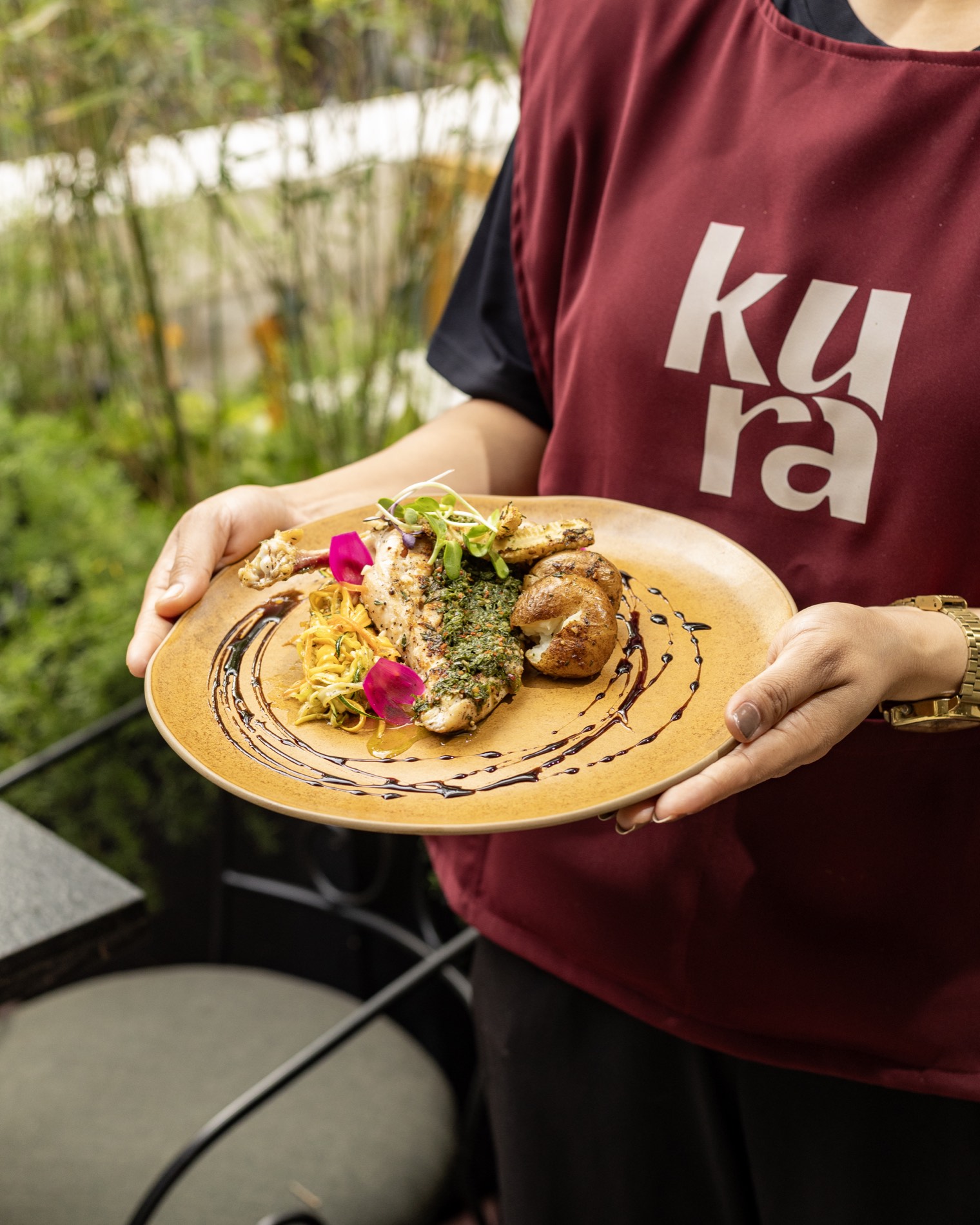
A few minutes away, Kura is attempting to prove that Bengaluru can still get excited about a new coffee shop, even in a neighbourhood that seems physically incapable of running out of them. The 3,000-square-foot Indiranagar café combines specialty coffee, an in-house bakery and pâtisserie with an all-day kitchen shaped by French technique and Japanese influences. Its founders, Kiran Vijayakumar and Prajwal Venugopal, spent close to two years studying coffee, roasting and brewing before opening the space.
What makes Kura genuinely interesting is its attempt to treat coffee with the structure usually reserved for wine or tasting-menu dining. Once a week, the café runs a coffee omakase that takes guests through a sequence beginning with espresso and moving through more experimental preparations. The rest of the menu is substantial enough that food does not feel like an accessory to caffeine: there are fresh pastries, hand-rolled pastas, breakfast dishes, grills and pâtisserie alongside the coffee programme.
The concept also feels distinctly Bengaluru. A city that has spent years turning coffee into both culture and competitive sport was eventually going to arrive at a coffee omakase. The difference is whether the experience has enough substance to survive the novelty. Kura’s emphasis on sourcing, brewing technique and in-house food gives it a better chance than most.
Read more: Inside Eatin’ Love Trattoria’s Pala Romana pizza launch
Bar MoonJar, Cambridge Layout
For the after-dark crowd, Bar MoonJar is one of the more thoughtful new additions. Sitting above chef Rahul Sharma’s Nila in Cambridge Layout, the intimate 28-seater opened in August with a low-ABV drinks programme built around soju, wine, vermouth and other lighter bases. Its nine signature cocktails correspond to the eight phases of the moon plus the sun, and the bar currently opens only from Friday to Sunday.
Low-ABV does not mean low ambition here. The point is to create drinks you can actually linger over rather than turn every cocktail into a test of alcohol tolerance. The food is equally compact and slightly unexpected, moving through prawn wontons, avocado pâté, scallops and other bar-sized plates.
The Congee Concept, Kammanahalli
Then there is perhaps the least showy concept on this list, which might also be one of the most lovable. The Congee Concept in Kammanahalli, an established address rather than a September opening, has built an entire restaurant around congee. Yes, rice porridge. And no, it does not need a smoke gun.
The restaurant offers multiple interpretations of the comfort-food staple, including egg congee and an Erachi Congee paired with Syrian Christian-style meat fry. It is also dramatically more accessible than many of Bengaluru’s newly opened dining rooms, with the average spend sitting around the few-hundred-rupee mark rather than turning dinner into an EMI decision.
That singularity is exactly why it belongs here. In an era when restaurants often worry that a focused menu might exclude somebody, The Congee Concept has made one dish the entire reason for its existence. The result feels more confident than another kitchen selling pizza, biryani, ramen, tacos and bao under the same roof.
Vaalai Restaurant, Kammanahalli
Also in the Kammanahalli orbit, Vaalai Restaurant is worth paying attention to for an entirely different reason: regional specificity. The restaurant focuses on Tamil Nadu cooking, with dishes including mutton seeraga samba biryani, fish fry, chicken meals and the particularly intriguing prawn dosa. It earns a place in this September selection for its clearly defined culinary focus.
This is part of a broader Bengaluru dining shift that may be more meaningful than any individual opening. “South Indian” is slowly becoming too broad a label for a city whose diners increasingly understand the differences between Tamil, Telugu, Kerala, coastal Karnataka and interior Karnataka food traditions. Restaurants that commit to one culinary identity rather than compressing the entire south into a single menu tend to be far more interesting.
Vivaha Bhojanambu, Marathahalli
The same argument applies to Vivaha Bhojanambu, whose Marathahalli outlet brings the Hyderabad-born brand to eastern Bengaluru. The restaurant draws from Telangana, Rayalaseema and Coastal Andhra traditions rather than treating Telugu cooking as a single monolithic cuisine. The menu includes dishes such as Bhimavaram Kodi, Guttivankaya Pulao and a large Telugu thali, giving eastern Bengaluru another regional-food destination with a clearly defined identity.
Read more: Explore more Bengaluru food stories
Why a focused concept matters
Taken together, these restaurants reveal something more interesting than a list of places to book this weekend. Bengaluru’s restaurant scene appears to be getting more specific.
One restaurant wants you to care about vegetables without pretending they are meat. Another wants you to think about pizza dough for three days before it reaches the oven. A café wants to guide you through coffee like a tasting menu. A tiny bar would rather pour lower-alcohol cocktails than simply make them stronger. A neighbourhood restaurant has decided rice porridge is enough of an idea to build an entire business around. Regional kitchens are finally comfortable saying exactly which part of India they come from.
That is the version of Bengaluru dining worth getting excited about.
Because the city does not need more restaurants simply because there is space for another restaurant. It needs places with a reason to exist.
And this month, at least a few of them seem to have found one.