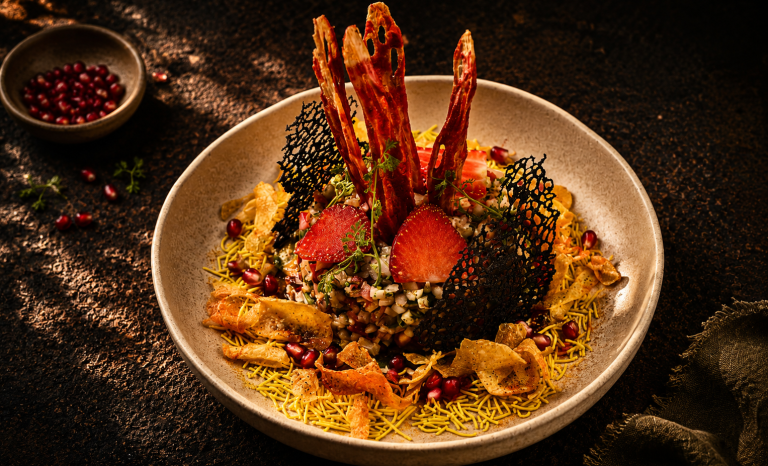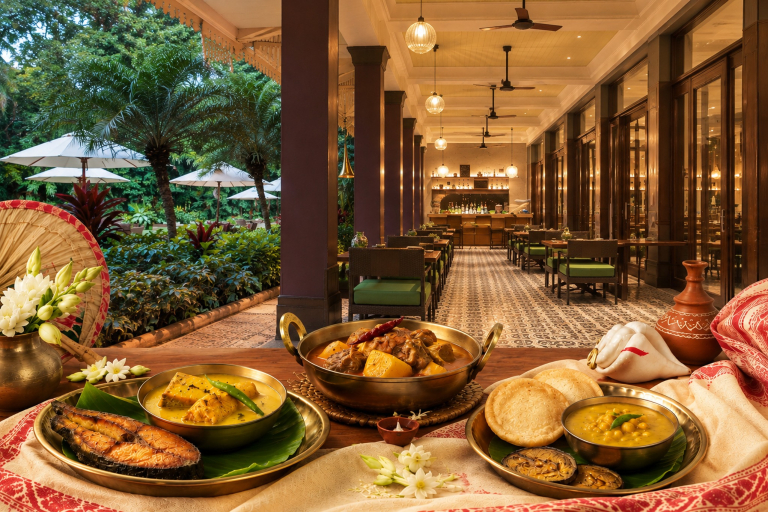
Bengaluru: The modern Indian dining landscape is currently witnessing a stunning, introspective renaissance. Chefs across the subcontinent are looking deeply inward, stepping away from westernized fusion to excavate the rich, layered culinary histories of their own regional heritage. At the absolute forefront of this movement is Chef Smriti Iyer—an architect-turned-chef, baker, culinary educator, and founder of the avant-garde platform Ananth India.
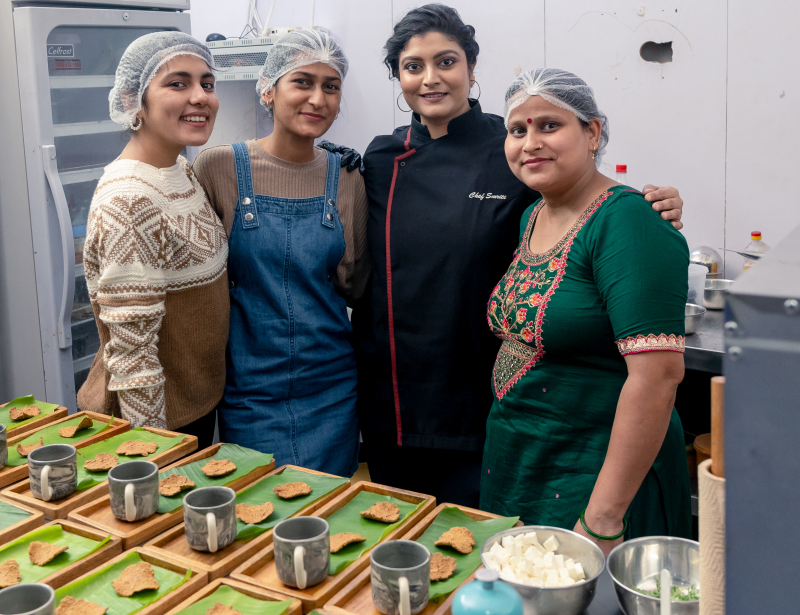
Smriti’s personal and professional map is a fascinating tapestry of starkly different culinary terrains. Born and raised in Delhi with deep Tamil and Malayali roots, and having spent her defining college years in Gujarat, her childhood and young adult memories are naturally packed with diverse culinary dialects. Her professional journey kicked off in 2014 with Smriti’s Special, which evolved from a creative Facebook page into one of India’s very first online baking and pastry schools, demystifying baking science for thousands. Today, her fluid work expands across menu consultancy, curated FMCG launches, and boundary-pushing dining experiences—including her iconic 10-course Palakkad tasting menu, the Agra Beyond Taj experience, and a legendary Eight-course Indian Chocolate Tasting Menu that treats cacao as a complex, savory element.
Through Ananth India, Smriti explores the “endlessness” of Indian produce and folklore. She treats plates like blueprints, flavor profiles like structural components, and vegetables with the absolute dignity they deserve. The Balcony Stories sat down with Chef Smriti Iyer for an unhurried, deep dive into her philosophy, her rigorous technical approach to intuitive cooking, and her mission to make Indian food unapologetically “cool” for Indians again.
You transitioned from architecture to the culinary world. How does your background in architecture influence the way you construct a dish or design a multi-course tasting menu? Do you see a structural parallel between building spaces and building flavors?
We were taught for many years to think about the design first then the execution and not the other way. I subconsciously use the same method to design a lot of my food. Think of the flavours and textures I want to achieve and then how to achieve it. A well-designed space is meant to invoke certain feelings whether it is with the play of light, colours or wind. The same stands true for a plate of food. When you see it, smell it, taste it, it is meant to invoke feelings. I find it easier to understand and achieve that through my education in Architecture.
You’ve mentioned a belief that food should be fun and that evolution is a good thing. In a culinary landscape that often fiercely guards authenticity, how do you balance respecting traditional regional roots with the freedom to play and innovate?
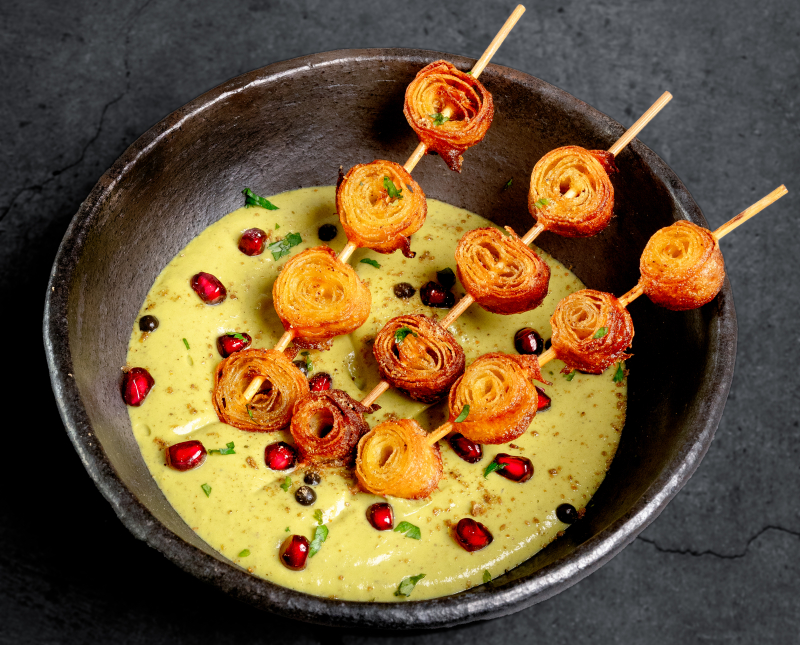
Whenever I am designing dishes from an existing “authentic cuisine” I keep in mind two things. First, I aim to keep the flavours familiar but in a new medium. Like my Dhokla Ice Cream is a savoury cold bite of delicious familiar Dhokla flavour but in a completely new medium. Or using the base Dhokla itself (a soft sponge) but changing the tadka so the texture remains familiar but the flavour becomes new. Second, I do not make fusion dishes. A Mor Kozhambu Pasta might taste good, but I believe we don’t need to lean directly on other popular cuisines to shine. My aim is to showcase the wide array of flavours and techniques we have within our country itself, and make people fall back in love with the food from India, a country which still regards foreign foods as “posh & fancy” and doesn’t give enough respect to what we have.
You firmly believe that vegetarian food doesn’t need to mimic meat to be fulfilling. What is the biggest misconception people have about modern Indian vegetarian cuisine, and how are you breaking that narrative through Ananth India?
The main prejudice is that people (especially Meat eaters) presume Vegetarian Food won’t have enough flavour. They think the Umami that meat carries cannot be achieved with Plants. But as someone who has generationally only eaten and known Vegetarian food, I know for a fact that Plants carry a World of flavour and I am here to make sure diners experience it. I respect all food, even meats. And I see food as just food, which is why we don’t promote our experiences exclusively as vegetarian. Although it is mentioned, it is not highlighted.
READ ALSO: The 30-Minute Royalty: Relishing the “Bemisaal Baluchi Express” at The LaLiT Ashok Bangalore
Your work is deeply rooted in regional ingredient storytelling inspired by your travels. Is there a specific, lesser-known indigenous ingredient you discovered on the road recently that completely blew your mind and changed how you cooked?
I cannot choose one such ingredient that changed my perspective. Through my travels, I have learned about many regional ingredients that are locally popular but lesser known in other parts of the country like Seabuckthorn from Ladakh, Kachampuli from Kerala, Perilla Seeds from Kalimpong, Churpi from Darjeeling, and edible Cactus from Thar. This diversity just goes to show how complex our country and all of its cultures are, and it makes me excited to realise that there will also be something new to look forward to.

With roots in Tamil Nadu and Kerala, childhood in Delhi, and college years in Gujarat, your personal map covers starkly different culinary terrains. Which childhood comfort food or flavor memory from these regions still sneaks its way into your high-end menus?
Almost every menu of mine has Coconut in at least one of the dishes, whether or not that particular cuisine includes it. Just like a Painter leaves her little signature somewhere in the painting to sneak in a bit of herself or a director leaves a little prop in the background of every movie she shoots to make her mark, I sneak in the coconut to insert a little bit of me in every menu. As for Gujarat, the diverse use of Besan from crispy or supple or spongy snacks and mains to sweets inspires me to think of ingredients beyond their assigned usage.
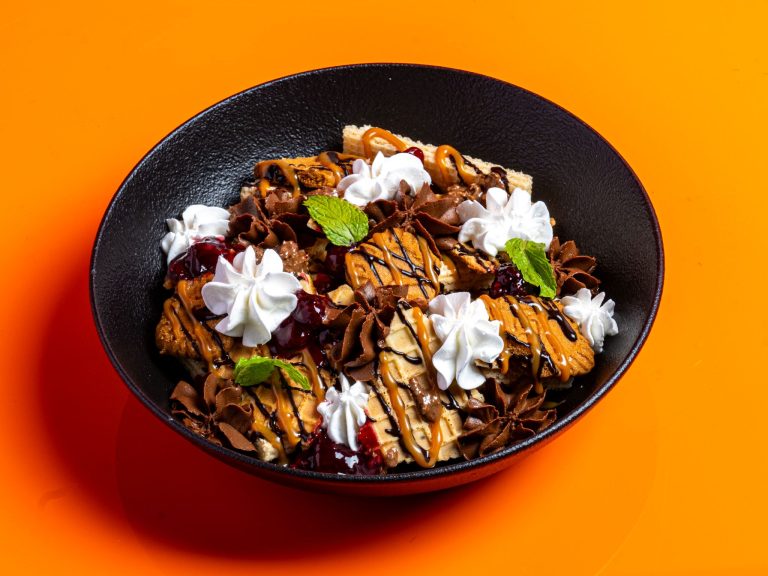
Your signature 8-course Indian Chocolate Tasting Menu explores chocolate in savoury applications. What was the most challenging Indian flavour or regional dish to pair with chocolate without making it feel like a gimmick?
Since Chocolate in its original form (without adding sugar) is actually a savoury ingredient, I did not find it at all difficult to feature it in savoury courses. My signature Chocolate Dal took the most time to get just the right balance between the savoury Chocolate notes and the creamy Dal, without one overpowering the other.
When you travel across India sourcing inspiration, how do you approach local home cooks or communities to learn about their indigenous techniques without losing the sensitivity of their stories?
My approach to learning about local food relies on two simple steps. First, I focus on attending cooking or foraging classes and local market tours directly with the locals. Second, I learn by simply just asking, because you won’t believe how many people happily want to share about their culture and food with the rest of us. I always make sure to give them full credit in case I share or post about it, and if they have a business, I support them by buying from them and promoting them to my community.
Smriti’s Special evolved from a Facebook page in 2014 to one of India’s first online baking and pastry schools. Looking back over the last decade, how has the Indian home baker’s appetite for baking science and technique evolved?
In my opinion, other than students going to Pastry School, people are less interested in understanding the science behind baking. They want to jump on to bigger, more complicated things like Wedding Cakes or Entremets without understanding the basics. It might be the result of having less patience overall thanks to social media. Because of this, we have modified our course offerings to better accommodate shorter attention spans. Previously, our courses were long-format and topic-based, such as the “All About Ice Creams Masterclass (Basic).” Now, we focus on shorter, single-product courses, like “Ultimate Chocolate Cake.” While these new courses are still backed by detailed science and logic, they feature a more concise syllabus.
You were exploring unconventional flavour pairings and savoury baking long before it became a mainstream trend. What is one flavour combination you championed early on that people thought was crazy then, but love now?
Tomato Pizza Ice Cream with Triple Pepper Macaron. This is a very savoury flavour with hints of sweet, making it absolutely perfect for the first or second course of the experience.
As a culinary educator who teaches the strict science of baking but practices intuitive, fluid regional cooking, how do you switch between the precise, mathematical brain required for pastry and the sensory, memory-led brain required for your savoury pop-ups?
My approach to savoury dishes is very much like how I practice pastry. It comes naturally to me to measure everything by weight and write down precise times and temperatures at which things cook. This is not just to maintain accuracy and minimise mistakes, but also to make it easier for my fellow teammates to replicate it without my constant monitoring. The creativity happens on paper and during the testing phase where we play with flavours and textures, but for the final experience, the kitchen very much remains a technical, mathematical place.
“The creativity happens on paper and the testing phase where we play with flavours and textures. For the final experience, the kitchen very much remains a technical, mathematical place.”
You’ve designed incredibly specific menus, like the 10-course Palakkad tasting menu and the Agra Beyond Taj experience. How do you deep-dive into a specific micro-region’s cuisine without overwhelming a modern diner’s palate?
Food from India much like its culture is complex, maximalist and overwhelming! People going for regional tasting menus have two reasons—either they know the cuisine and want to experience it in a new format or they want to experience a new culture altogether. I aim to break it down such that the flavours slowly build up giving a background of each dish, but I don’t control or restrain something that’s inherently morish. I have observed that even if it becomes overwhelming for some diners, they are always happy to have had something new and choose their favourites.
If you had to pick one single dish you’ve created that you feel perfectly encapsulates the concept of Ananth (endlessness) in Indian cuisine, which one would it be and why?
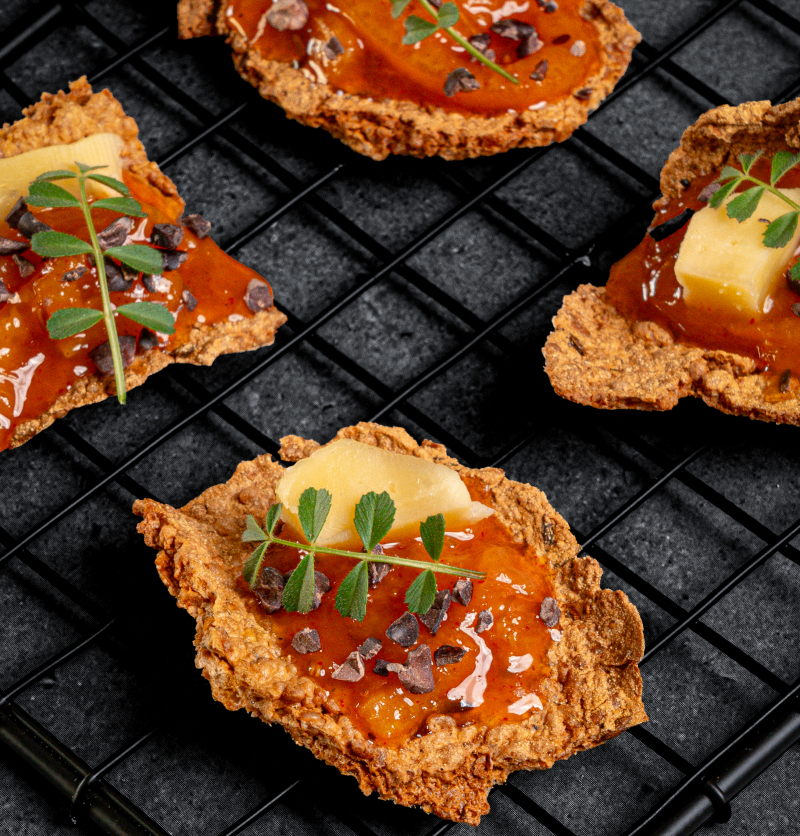
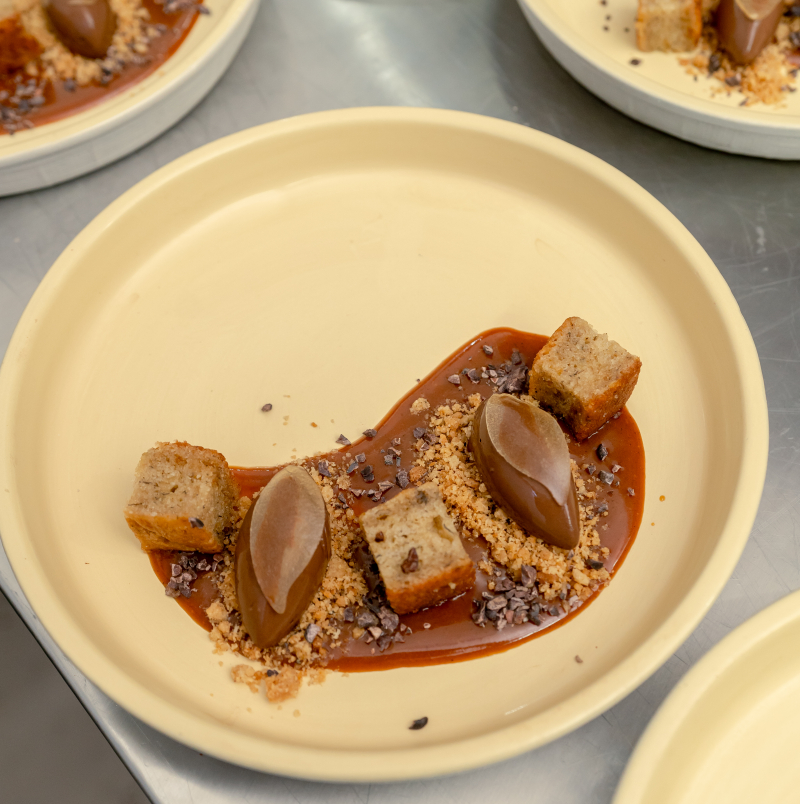
I know you asked for one, but I will give you two. For savoury, my signature Dilli Ka Sandwich is one such dish that is deeply inspired by the Shakarkandi (sweet potato) chaat stalls with star fruit on sticks poking out. It features a beautiful Shakarkandi Bread with fermented Cashew spread, ripe Star Fruit, and Ber Salt on top, and it has been an absolute hit. For sweet, my signature dessert Prasadam captures this beautifully with layers of Coconut Sponge, Banana Poornam (a banana jam served as an offering to God), and a Payasam Mousseline with Camphor adorned with crunchy Cashews and Raisins. Taking just one bite will instantly transport you inside a South Indian Temple.
READ ALSO: Island Rhythms: Slow Living and Fresh Catches at Barefoot at Havelock
Food and memory are deeply intertwined. When guests sit down at one of your pop-ups, what is the emotional response or feeling you hope they walk away with, beyond just being full?
The hope is that diners enjoy the food in their own way and have at least one course that reminds them of the entire culinary meal they experienced.
The food scene in India is witnessing a massive renaissance with chefs looking inward at their own heritage. Where do you see the future of Modern Indian Vegetarian cuisine heading in the next few years?
It makes me happy to see many chefs and restaurants highlighting food from their own cultures. Creativity without fusion might be the way to go to make Indian Food “cool” for Indians again. I sincerely hope for a time when a celebratory meal for a young Indian doesn’t automatically mean eating a foreign cuisine.
At Balcony Stories, we love the quiet, reflective moments behind creative minds. When you are off the clock, completely exhausted after a massive pop-up or a long day of filming courses, what is the ultimate comfort meal you cook just for yourself?
Truth be told, I don’t prefer cooking for myself after a long day of work. But if I absolutely had to, I prefer picking at simple foods like a plate of crisp apples, cucumber, some cheese, leftover sabzi, oorgai (achar), muruku, and fresh yogurt. It might not sound very exciting, but it completely hits the spot.
What makes Chef Smriti Iyer’s trajectory so compelling is her refusal to let Indian vegetarian food be defined by limitations. By layering the structural precision of an architect over the rigorous chemistry of a pastry chef and the sensory memories of a lifelong traveler, she isn’t just creating menus—she is constructing a vibrant, living archive of our culinary geography. Through Ananth India, she reminds us that innovation doesn’t require casting away our roots to borrow from foreign trends; it simply requires looking closer at the endless culinary wealth already waiting in our own backyards. As the subcontinent’s food renaissance deepens, Smriti stands as a vital voice proving that true luxury isn’t found in imported pretension, but in the mindful, joyous evolution of our own culinary storytelling.